
This week, we get a crash course on 1827 Edinburgh and the serial killer case that rocked the first half of the 19th century. Rebecca tells Laura how she learned about the murders and how it has become a bit of an obsession…because Serial Killers are more interesting in a gothic old city.
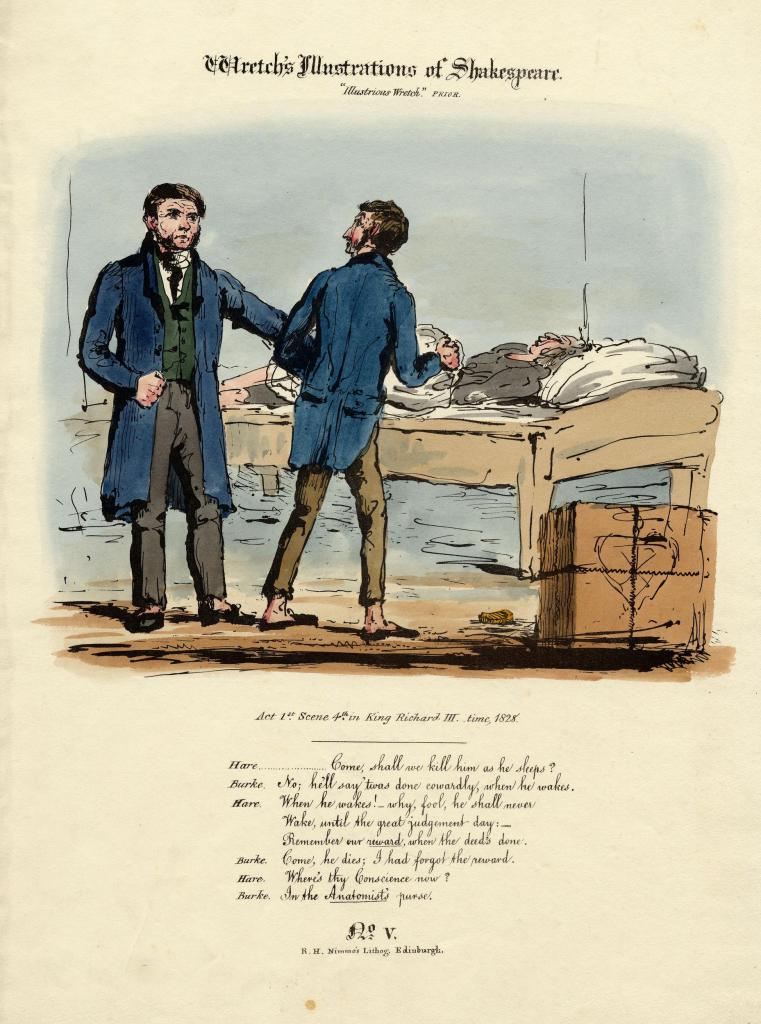
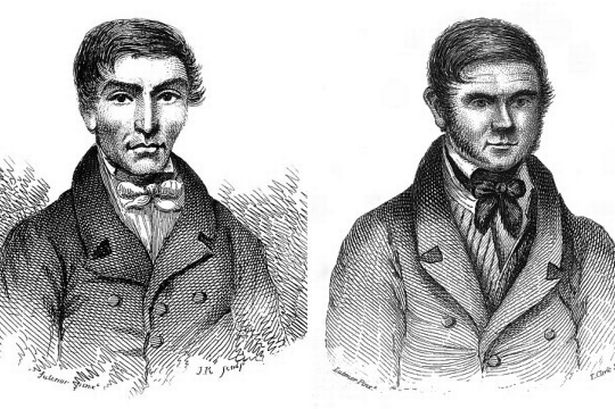
Sources:
- The Anatomy Murders – by Lisa Rosner
- An Eye for a Killing – BBC Radio 4
- Burke & Hare – Hugh Douglas
- Note: this book has some good context, but is very dated in its analysis and understanding of the peoples involved.
- University of Edinburgh
- Surgeons’ Hall Museum Edinburgh
Related Episodes
Transcript – Part 1
Burke & Hare – Part 1
rebecca: [00:00:00] Okay, so we are back after an unplanned hiatus, because, you know, life, and we have two full time jobs and other side gigs, so we are back, we’re actually recording some more for season two, and today we are going to Scotland.
Laura: I wish. I wish we were literally going to Scotland.
rebecca: I mean, same, I haven’t been back in quite some time and I really miss it.
Laura: Field trip.
rebecca: With our magical deep pockets.
Laura: Is that something we could write off?
rebecca: Oh, totally.
Laura: As a business expense.
rebecca: Totally. We just have to have the money to do it for the first thing.
Laura: Okay. Well, if you guys could buy like a couple more t- shirts or something, that would be neat.
rebecca: Oh yeah, that’s right. We have merch available through our website and, you know, we’ll just also take checks in the form of cash or other things. So, you can do whatever you want that.
Laura: We’re happy to list Venmo, Cash App, PayPal. Whatever [00:01:00] you guys have.
rebecca: Buy us lunch or coffee.
Laura: Coffee would be awesome.
rebecca: But if you don’t have any cash, we totally get it. We’ve been there. Just like, subscribe, leave us a review. Like all of those things really help us become more visible and allow us to keep doing the content that we like.
Laura: . And don’t forget you can also follow us on social media. We are on Instagram. And TikTok I mean, we technically have an account on what used to be Twitter.
music break
rebecca: Today I am going to tell Laura a little bit about some of my travels to Europe when I was 19, which was over 13 years ago.
Laura: Wait, how old were you?
rebecca: 19. So I’m, I’m 32. I took a year and a half off between high school and college, saved up my money and decided to do a two and a half month trip to Europe to stay with some [00:02:00] friends and acquaintances of my parents and then also family.
Then I found myself going to Scotland, obviously I’m in the UK, of course you have to go to Scotland at least a little bit. There are all these locations I had done research on that I wanted to see. And I was very determined to check a lot of places off on my list. . I had spent some time in England with some family friends of my mom, and then took the train from York into Edinburgh. And I had been told I really would like Edinburgh, but I did not know…
Really what to expect. You see pictures. You hear stories. Again, you don’t totally know what a location is going to be like until you arrive. And I remember pulling into the train station and lugging all this crap I had with me out of the train station.
And I remember I had read in my… paper guidebook called “Let’s Go Britain on a Budget”, which was a thing at the time that was written by Harvard students. And they were fantastic guys that just don’t exist anymore because nobody uses. paper guidebooks anymore. Or [00:03:00] hardly. And I remember them saying you should get a cab from the train station to your hostel if your hostel is in Old Town.
And I was like, what do these British people know about mountains and hills? Like everywhere I had seen in England was super flat because I had only been in London and then I was in Norwich and York had some rolling hills, and I was like, this can’t be that bad. Like, these people are exaggerating. I’ll be fine.
I’m lugging all of this stupid shit out of this train station, and I turn around as I’m exiting the train station, and then I see it. And that is Old Town Edinburgh sitting up on a hill, which I later learned was a volcano at one point. And it just like, it almost feels like it rises out of nothing.
It feels almost… magical. It’s just sitting above where New Town was, where I had exited the train station it’s all Georgian buildings, and I’m just surrounded looking at [00:04:00] Medieval style buildings, including the Medieval Castle. And I, I was totally flummoxed.
I’m also stubborn. So I dragged all my shit up this old volcano to my hostel. Sweating, tired, exhausted. Get to my hostel. The front door of the hostel looks on Edinburgh Castle. It’s magical. It’s an old Georgian building. I’m in Old Town and I’m immediately just in love with where I’ve ended up.
You know, I remember the next morning waking up and I could hear bagpipes playing and just like echoing through the city. It was, kind of dark and moody and this is April. So, you know, things are still pretty rainy and cool and I’m just completely in love with the city at this point.
And so this kind of begins this journey of really loving Scotland all around and traveling more that trip. And then also going back in 2015 to work on my master’s through Edinburgh Napier University in [00:05:00] international journalism. And I have hopes to get back there again soon.
On my first trip I start piecing together things. One thing that really caught my eye was the Surgeon’s Museum listed in the guidebook. And I was like, oh, that sounds super interesting. I’ve always had a weird interest in anatomy and science and i. e. here we are doing a podcast of this over a decade later.
Laura: Yeah, I was just about to say, nobody will be shocked by that.
rebecca: I was like, cool, I gotta go to this thing. And they had a skeleton on display and it was William Burke’s skeleton. And I think the plaque said something about he murdered these people. And then like part of the deal was he had to be put on display and I was like, okay, that’s, that’s kind of weird.
But like old towns have weird stories. I mean, the entire museum, they’ve done a full refurbishment since 2010, but the entire museum had, you know, tons of things in formaldehyde, limbs and hands and penises and, you know, different diseases, maladies, problems [00:06:00] on display. And it really is meant to be educational and show you kind of the progression of science and the preservation of bodies and our understanding of human anatomy.
So the whole experience was great, but I’m like, okay, this guy’s skeleton. Like that sticks with you a little bit.
Laura: Is his skeleton just like standing up in a display or did they like do something to it?
rebecca: It’s literally just a skeleton. It’s aged looking, it’s kind of a brownish color and it’s in a glass case. And it’s just some guy’s skeleton. I guess I kind of went into it because I’d heard about things like the Mütter Museum, thinking, Oh, it’s all going to be anomalies or weird things. No, it’s just this guy’s skeleton. Okay.
it stuck with me, but I was more at the time I was interested in preserved limbs with veins, they use things like wax and different materials to build out anatomical models. We talked about that a little bit in the anatomical Venus, which was our first episode and how that kind of progressed through time to [00:07:00] create these figures that were meant to be educational and that have stuck around for centuries.
The other thing I did was I had heard about the Edinburgh vaults and I grew up in the middle of nowhere. I didn’t really have city access. I didn’t go on a subway until I was in Paris. the first time on this same trip, unless you count the Denver airport, which I guess you could, but not a real subway. All of these things were very new to me. And so I learned about this tour and you could catch it from the Royal mile, which is the mile long of old town Edinburgh where it goes from the castle, the main Edinburgh castle down to Holyrood house.
And it has, all these different tourist activities and different things, but you can also meet up with tour guides there’s also buskers and what not. So I found a tour that caught my eye called Mercat Tours, which is an old Scots word for market. And they did the vaults tour. Originally I had planned to do the history tour. And they couldn’t fill the spots. So I came back and did the ghost tour a little bit later. In this vaults tour You go [00:08:00] down into this thing called the South Bridge. The South Bridge was built to connect the old town to what was being built in the 18th century which was the new town and they needed a relatively easy way to move more of the wealthy, trendy people from Old Town into New Town, as well as, you know, go back and forth for commerce and different things.
So they built this giant bridge kind of from the bottom of the city at the bottom of the volcano up so that it could easily connect the two cities. If you look at pictures of Edinburgh, you notice it’s pretty hilly. There’s a lot of hills around it. There’s waterways, there’s Arthur’s seat, which is, you know, this huge grassy area you can hike to.
Even just walking around today, you’ll notice nothing is very flat. They built the South bridge to connect the two cities. And underneath the South Bridge, they had the idea of building these half cut vaults, which the theory was that it would open up opportunities for commerce inside of the South Bridge. So people could set up little [00:09:00] shops or set up little taverns or store things.
And so people were kind of excited about this because it was literally like building more storage and buildings out of kind of nothing, whereas nothing had existed there before. So they built them up. But. What they found out in time was that, funny thing, like when you’re underground and there’s not a lot of oversight and it’s dark and kind of separated
from the eyes of the general public, sort of nefarious things can start taking place. It became part of the slums, there’s a lot of other areas that weren’t very good, but you know, kind of sketchy behavior, whether it was smuggling or having illegal substances or things like brothels, etc. So it became pretty quickly this underbelly, literally, of the city.
And in time it began being kind of moved away from. But one thing that they said on the tour… And we’ll learn if that was true or not was that Burke and Hare, along with other body snatchers, [00:10:00] would stow bodies in the vaults when we get to the 1820s before taking them to the anatomists. So that also stuck with me at the same time I’m going through this.
I meet this guy, we start dating. And of course I hear his stories. He grew up near Edinburgh. He has all the stories that came from school and friends and all that. Obviously that did not work out as I lived back in Colorado, but I learned a lot from sort of the cultural ideals around Burke & Hare from hanging out with people that had grown up in the area who are also around the same age as me.
We fast forward a few years and Simon Pegg makes a movie called Burke & Hare, which is loosely based on the history of Burke & Hare. And we, there’s all these sort of like murder mystery podcasts and there’s all these different things on Burke & Hare. So it’s becoming more mainstream for people to know about Burke & Hare.
But, I realized when I was researching this episode that there’s still a [00:11:00] lot of misinformation on what actually happened, why they were tried, how they got caught, and the different details that went into how they were living in this city in the 1820s. And so that’s kind of where we are today, as I want to talk a little bit about the city and what was going on that led to what ended up being 16 murders.
And why these men murdered how they did.
Laura: Dun, dun, dun.
music
rebecca: I talked about, late 18th century Edinburgh, the wealthier, more influential people are starting to move to the new town. Which is why they build the bridge, which is why they build the vaults. And so by the time you fast forward 50 years, we’re in 1827 in Edinburgh, and the new town is already not as trendy, [00:12:00] but plenty of people still live there. It’s a little more like a suburb or high end neighborhood that you might see today, and a lot of commerce is still happening in old town. So people are going back and forth. There’s a lot of milling about of different classes and different groups.
Another thing you have happening, which is a continuation of what has been going on for centuries, is that Edinburgh built some of the world’s first skyscrapers and by skyscrapers, they mean really tall houses that have multiple floors and that there’s multiple families, generations and wealth dynamics going on in one building.
So you have , wealthy people living in some parts of the house, usually in the middle part of the house where it’s the most comfortable as far as heating, light, access to things. And then you have people that are poor living in the bottom, and the poorest living in the [00:13:00] very top of the houses.
Which those are usually smaller rooms. They don’t have as much access to fresh air, the street, etc. So you have a big blend of socioeconomic things happening in the streets of Edinburgh at any time. And because it’s all built up on a volcano, everything is built up going up the hill. So like some of the houses are shorter, some of them are longer, and like they just kind of build up where they can. And at this time, you also had several fires that ripped through the city, destroying a lot of old architecture and old designs. But people rebuilt on basically the same medieval layouts that they had been using for centuries.
So when you go to Edinburgh today, you really see an early 19th century city that was built on the same plot lines as a medieval city.
Laura: Okay, gotcha.
rebecca: It looks very medieval. It looks very gothic. Until more recently, it was covered in black soot from all of the coal [00:14:00] and chimneys that were being burned.
Laura: Interesting.
rebecca: So that’s where it gets the name Auld Reekie, which auld is a Scots word for old, and reekie just kind of means dark, decrepit.
Side note, Auld Reekie often is known for meaning Old Smoky, that’s a more commonly accepted term.
You have all these things called closes that run up and down the mountain that are literally just alleyways full of stairs and you can go in them today they’re little, they’re pretty narrow, but one, they acted for an easy way to get from places throughout the city. And two, they acted a little bit of like drainage. So water would run down them, but also mean like things like waste would run through them. They weren’t very pleasant in a lot of areas, and it would all kind of drain down to the bottom of the volcano or the mountain and collect in like a big pool, which no longer exists, but there’s like a big pond kind of sitting at the base of the volcano.
So closes acted as a way to connect the [00:15:00] city almost like a subway system or a bus system all for walking. You also have people using horses and ox and different things going around
in one part of the city there’s an area called Grassmarket which it kind of sits nestled at the base of the castle. You can go there today. It’s one of my favorite parts of the city. There’s some great shops there. They do some beautiful farmers markets. There’s a fantastic vintage store called Armstrong’s down there. But a lot of people that were relatively poor lived there because they’re a little bit further removed from the main parts of the city, the main parts of commerce.
And. It was a little bit older, a little more run down, so people could kind of establish their lives there if they didn’t have a lot of money. And people tended to work a wide variety of things. One thing that was going on in the 1820s is there was a pretty significant economic dip. So while the Napoleonic Wars had been happening in Europe, and a lot more of Europe had been affected by them. Scotland had been pretty insulated. But then when you have the Battle of Waterloo and I think 18 15 things started kind of [00:16:00] catching up to Edinburgh. So there just wasn’t as many opportunities. Trade was a little more stagnant. You know, we could go into that forever, but things aren’t looking as good.
So people are in pretty Uncomfortable financial straits, like they’re really struggling to get by and that’s where you see a lot of people trying to just make a living and just survive.
Going back to the late 17th century, you start getting these institutions of medicine, which need bodies to do anatomy lectures.
And at the time, it’s becoming more and more common to use bodies in understanding of medicine. This is really where you start getting an idea around modern medicine. You know, it’d take a few hundred years to get anywhere where we would recognize it. You start kind of getting an idea around it. , anatomists and doctors are starting to be allowed to dissect bodies for educational purposes, and they are in this weird [00:17:00] thing across Europe where they need the bodies, but there’s not really a set chain of acquiring them.
So what ends up happening in a more legal standpoint is that people that are poor, destitute, homeless, don’t really have a family or a name or an identity their bodies start being collected for anatomy lectures and they’re used without the consent of the individual that passed away or family.
Again, maybe because there wasn’t any family, maybe because they couldn’t consent. And it’s anything from infants to elderly people. So it’s literally any body that can be acquired.
The problem as we start going through time is that more and more people are going to cities, London and Edinburgh become the two epicenters of medical education and then Edinburgh really starts to take off as we get into the 18th century as being the place [00:18:00] to go for medical education. And there were some really brilliant minds for their time. Living in Edinburgh and working on dissections and anatomy. The Monro family in particular, which becomes pretty big player. Family really establishes the medical institution at Edinburgh University. They kind of become the cream of the crop.
We get to the 18 teens and Monro family and legacy and their ability to sort of do all of these anatomy lectures, kind of dwindling. People are losing interest. So you get someone by the name of Barcley.
He starts his own Royal College of Surgeons in Edinburgh. And he really starts picking up interest. And he gets hundreds of students to all of his lectures. He really becomes well known. Well, he also needs bodies for this, which means that there becomes a sort of underground trade of grave snatchers, or body snatchers.
And essentially what happens is they go in after a funeral and they take a [00:19:00] body out of the grave and take it to be dissected by the anatomist. Now, At the time, anatomy dissections were still pretty controversial. There is sort of an undertow in some Christian circles that you need the entire body to be resurrected when Christ comes back.
Politicians start talking about this. There was one case. In which politicians were talking about, well, we’re taking the poor because they’re paying back their debt to society by being dissected.
Well, why aren’t we taking nobility? Why aren’t we taking certain politicians? Because we’re paying for them to live a good life. Obviously that never happened, but he’s pointing out kind of the hypocrisy of like, you’re ready to take the poor, but you don’t want to give anyone else. But of course, obviously there’s not enough poor dead people to meet the needs of the anatomy halls.
You have the grave snatchers and they’re stealing bodies, which leads to where, if you go to like Greyfriar’s Kirkyard or other places, you’ll see these giant cast iron grates over graves. And it was [00:20:00] not to keep vampires in the ground, much as people seem to think it was to keep people from stealing bodies.
And that’s why they were made. Same with any type of large stone enclosures. You know, some of it was preservation and showing wealth and all of that. Memento Mori. Some of it was also to keep grave robbers out of taking corpses.
Laura: It could have also been vampires.
rebecca: I mean…
Laura: Cause that sounds exactly like a story that a vampire would tell you.
rebecca: Oh, right. Okay. Well, vampires wrote all of these books
, it continues to be this big problem. There becomes laws on the books where it’s not. So people were stealing bodies before this, even before anatomy, or digging up graves. They were looking for things like clothes, jewelry, other expensive items that people might have been buried with.
We’ve seen this throughout human history. Ancient Egypt, you had people of their own time raiding tombs to get goods of kings and other wealthy individuals.
Laura: They dump all kinds [00:21:00] of wealth into the graves with these dead people. Who thought they were way more important than they really were.
rebecca: And… And then you have somebody else starving, or they can’t feed their family. And again, like, there’s this level of desperation. So people are gonna get creative with ways to take care of themselves and others. Full stop.
Laura: I totally get it. Like, we are…
Totally desperate right now. We’re trying to pay for just being alive. In Colorado everything is so expensive. A lot of people, like the joke of selling feet pics on the internet keeps flying around the circles I’m in. I’m wondering how many people are actually doing it on the down low. Huh. I need them to reach out to me and tell me how to get started because we
broke.
Yeah. So I get it. Like I’m not, I’m not at
stealing corpses level desperate
rebecca: that’s good.
Laura: Not yet.
rebecca: mean, would you have some better [00:22:00] options available in our, our culture at this time?
Laura: God bless the internet.
rebecca: Anyway, so. This becomes a problem. It’s illegal to steal clothes from the dead, but it’s not necessarily illegal to remove the body. So people keep doing this, and there is a lot of public outcry. There are riots sometimes, a corpse was found outside of the surgeon’s colleges. There’s upset and frustration if people learn of somebody being duped into selling a corpse or into somebody’s corpse being sold or stolen.
The public is pretty frustrated. But you know, again, like these medical students in a lot of respects do need something to learn from, and there is a requirement for a lot of these. Studies to have X amount of hours into anatomy studies and into dissections and attending these lectures and better understanding how [00:23:00] the human body works.
And this is where we to this day still rely on some of the stuff that was being researched then. In our understanding of the human body and its complexities. So it’s this really hard, dynamic where we even talked about in the Body World episode too, is like, how do people consent? How important is consent to having your body used?
And then also, there’s this huge , medical advantage to having your body used as well.
Laura: There’s a meme that floats around that says, Me. Donates my body to science. Science. Oh no, thank you.
rebecca: I think the hard thing too, like I just learned this recently, I’ve always, I’ve been an organ donor for forever. . And I will be until like I have cancer or can’t anymore. But apparently if you’re an organ donor, you can’t also donate your body to science to be used for dissection because they need as much of your body intact as possible.
So I find that a little frustrating. [00:24:00] I was like, okay, but like you just maybe took my eyes. Can’t use my head or like, right?
Laura: Like just lop off the parts that you took and just use the rest of it.
rebecca: So if you ever get cancer, you can’t become an organ donor. Consider donating your body to science. That’s my little PSA.
So this is the world in which this individual, Robert Knox, sort of comes of age in Edinburgh as a medical professional. He’s born about 1893 to a pretty well off Edinburgh family. He goes to school at University of Edinburgh. He went to the Surgeon’s College with Barclay. And he kind of becomes this sort of star pupil of Barclay. but, life takes him other places. He is in Waterloo at the battle and works as a medical assistant. He goes to Belgium for a while, tending to wounded.
He gets sent to South Africa and he’s involved with the 18 [00:25:00] 19 Cape Frontier War. While he’s there, he also does all this research on hyenas, which becomes really popular in the understanding of animals in that area. He kind of starts building this reputation as being quite good, and he returns to Edinburgh under Barclay and starts working with him as an anatomist. And he quickly becomes really popular in his anatomy dissections because he’s young, he’s pretty advanced for his age, but he’s also got some like weird quirks about him. He had suffered from smallpox as a child and was blind in one eye and he was quite disfigured.
We don’t see this much today, but smallpox was known to really, disfigure your face, your limbs, like you’d have scars. If any of you guys had chicken pox in the 90s, which a lot of us did, you might have a couple spots where maybe you scratched too much and then you have a scar.
He’s wearing these eccentric [00:26:00] clothes as well, he has this sort of knack for flamboyant outfits from the information I was reading. And he, along with other surgeons in the area, including Monro, Barclay, they’re buying bodies where they can get them. Barclay dies soon after Knox returns around 1827. And so Knox inherits this university in his mid thirties, and he’s got one of the best universities in the entire country basically under his thumb. And so he continues to do the anatomy lectures.
Other things that were happening to bring in bodies beyond the grave robbing was they were using Ireland a little bit as a resource. They would take bodies from the poor in Dublin and other areas and ship them over to the universities. They had just finished something called the Union Canal, which connected Glasgow to [00:27:00] Edinburgh. And it was pretty easy to get ships into Glasgow and materials and then ship them into the city of Edinburgh from there on the Union Canal.
So they were getting bodies from Ireland pretty regularly. And granted, it would take a little bit of time to get those corpses. So by the time you’re getting them, they’re not particularly fresh.
And this really opened up for me where I had thought for a long time that they wanted the bodies super fresh because they would dissect them within a couple of days.
And that’s where I learned that’s not really what was happening.
Laura: Oh, really?
rebecca: They would take the bodies they would remove things that would make somebody look particularly recognizable. So they’d cut their hair, if they were women, they’d shave their faces, they’d kind of clean them up in a certain way to make them just very plain, if you will, to kind of remove, identifying markers or wealth status.
And granted, a lot of these people would have been poor. So, you know, certain things that we’d associate with maybe having a more [00:28:00] luxurious life just didn’t really apply. However, they would then soak the bodies in an alcohol mixture for quite some time. So in one book, it mentioned a few weeks to a month, it just really depended on when things were scheduled and when things were needed so they would soak the bodies and it would preserve them Not as well as chemicals like formaldehyde and sort of modern techniques that we have but it would preserve them pretty good .Granted this is before we have embalming techniques like we would come to understand in about 30 40 years.
And guess who was also a student of these schools around this time?
Laura: I couldn’t even begin to guess.
rebecca: Charles Darwin.
Laura: What?
rebecca: Darwin was attending these schools in 27 to about 29 .So he was hanging out in Edinburgh going to school around the same time that these things are going on.
And was known to have gone to some of Knox’s lectures.
Laura: Interesting.
rebecca: Right? So [00:29:00] Knox not only is kind of doing these things, he looks like an oddball, but he’s kind of a fucked up dude in other ways.
Laura: Pfft.
rebecca: Go figure.
Laura: Tell me about it.
rebecca: White man, pretty well off, privilege of this era. So, while he’s in places like South Africa, and then also back in Edinburgh, he starts building these sort of, I would say precursor eugenics attitudes towards other people.
And it wasn’t so uncommon at this time, but his writing becomes kind of a fuel to other racist ideologies around the time and, you know, you could argue influenced individuals like Hitler by basically saying that all of these other people other than white Protestants are basically other races and they should be exterminated and basically we need to get rid of them.
And he has kind of this. shitty attitude. He writes a lot about it, you know, basically getting rid of people that are from Africa and getting rid of people that are [00:30:00] Irish Catholics. And so he has this toxic ideas towards humanity again, not so uncommon for the time, but he definitely adds fuel to the fire that people that , do not match his ideal person are less than.
In some of the research I did, people pointed out, Burke & Hare were the murderers, but this guy’s ideology lived a lot longer and spread a lot further and did a lot more harm.
He kind of develops these sort of genocidal ideas. Just not a great dude. The book I read by Lisa Rosner, which is The Anatomy Murderer, she talks about, not necessarily in the book, but in a podcast I listened to her, she was talking about how when she originally went into the research for the book, she wanted to give Knox a little bit of the benefit of the doubt.
That like, there’s no way… He could have known, there’s no way that he would have done it, and as she got into the research, she became pretty comfortable acknowledging that he must have had a little more insight on that these things were happening, versus [00:31:00] kind of playing dumb like he sort of tried.
You know, cancel culture existed on some level, same as it did anywhere in the world where you have rumors, you have the equivalent of tabloids, you have different things sent out and shared., his reputation was pretty strong in Edinburgh, especially as a doctor of medicine. And this is where you see scientific practitioners really put up on a pedestal.
And maybe given more credit than they deserved around certain ideas that they maybe held, you know, he was maybe a great anatomist, but why are we listening to him on his understanding of different cultures and races? I think the only big thing that people at the time were put off with him before the murders happened and before the, it all came to light was that he married someone that was in a lower class.
he’s sort of the authority figure that allows a lot of this to happen. He’s sort of the connection that makes this happen. And granted, he’s not really doing anything different than anyone else but he just happens to be the individual that, don’t [00:32:00] ask, don’t tell, really applied to.
music
rebecca: So we get this William Burke. And he’s born in around 1792 in County Tyrone in Ireland, raised Catholic. He grows up in a pretty comfortable middle class farming family. He gets a really good education. At that time, if you were somewhat educated and had some connections, you could join the British army.
We have to remember that Ireland was under British rule, same as Scotland at this time. And Ireland was really kind of divided into two camps. You had. The Catholics and you had Protestants, some of the Catholics were able to work themselves up into a more of a middle class standard of living. And then you had Protestants, which really held the majority of the wealth and control in the country, whether it was government or land ownership.
And this goes back to [00:33:00] the late 16th, early 17th centuries, where basically the Brits try their firsthand at colonialism and they start sending. Large amounts of Scottish people over to basically colonize Ireland, take over land, and sort of work under the thumb of What ends up being James I, 6th of Scotland, 1st of England, predominantly.
And then it just continues to go from there. So when we’re talking about bodies being moved over from Dublin or other parts of Ireland, there’s this long standing, several centuries old, trade network of people and movements. So, Burke is kind of in the better off Catholic subcategory, if you will. But there’s still a lot of resentment and conflict.
Poverty problems. So he joins the military with his brother. And from what is known, pretty standard army time. He gets married around [00:34:00] 1817 ish, records are a little shaky. He has some type of conflict with his father in law over property rights and he just leaves.
He leaves his wife and he later says he had two children with her and he just abandons them and decides to go to Scotland because she doesn’t want to leave. Again, we don’t have a lot of records of that, but he goes to Scotland probably to start over, part of it’s probably to look for work.
So the union canal, which we mentioned connected Glasgow to Edinburgh is being built at this time. So Burke realizes he can get a job to sustain himself. While he’s in Scotland he meets people and including this Helen McDougall and McDougall had been living with another man named McDougall, but was estranged from her actual husband.
And so for whatever reason, she decides to link up with William Burke and they start living together around Edinburgh area, kind of traveling with work, doing this and that, you know, reports. [00:35:00] And it’s hard to know how accurate this was because. Most people didn’t start discussing these characters until after all of the horrific things they did. So it’s hard to know who were they really. People report her as like not being very attractive or being like really. violent or angry or, you know, but there’s also a lot of evidence to show that like William Burke was sleeping around on her and like doing sketchy shit. They’re not maybe the happiest couple, but they’re together for some reason. They’re living in Madison by Falkirk at one point, they moved to Edinburgh in 1827 ish, maybe a little bit earlier. And while they’re in Edinburgh, they start selling secondhand clothing to the poor.
You know, they would have pulled this from maybe trash and mended it. They would have maybe worked a little bit like a pawnbroker to convince people to sell stuff. They do okay. Burke trains and becomes a cobbler repairing shoes. So they start bringing in about a pound a week, GBP, Great British Pound roughly five pounds a month, which when I [00:36:00] looked into the cost of living comparison, it would have been similar to like making about 5, 000 a month here.
So like you’re not doing terribly, but you’re not really doing as well as you could be. You’re, you’re surviving, you know, you’re not thriving, but you’re doing okay. So around 60, 000 a year U S now I’m, I’m basing this off of the cost of living in Colorado.
There’s plenty of other parts in the United States where 60, 000 a year would be a pretty comfortable life, you know
He’s known for being very charming and known in the community. Even though he was raised Catholic. He starts attending Presbyterian meetings and grass market area where they’re living and then he’s known to have carried around a Bible.
So then we have his buddy here, which is also named William And his name is William Hare. When he’s arrested after the murders in 18 28, he claims he’s 21. But [00:37:00] other records and other information indicates that he was closer to Burke’s age. It’s kind of hard to tell. Lisa Rosner, she kind of sided with the idea that he was younger based on the things he said and did. I could see him still being pretty young, like in his 20s.
So he meets Burke around the time he’s probably 19, 20 ish. somehow become really fast friends. Now again, Burke is known to be very charming. Hare is probably a younger guy. He’s also from Northern Ireland. He grew up in Derry, also known as Londonderry in Ireland. And then he also went to Scotland to work on the Union Canal before moving to Edinburgh.
They don’t meet working on the Union Canal, they meet working other sort of menial labor jobs, like working for farms and that sort of thing. And he meets this woman through kind of a mutual acquaintance that he was boarding with, her husband [00:38:00] dies, he kind of becomes this convenient suitor, her name is Margaret, and they sort of shack up together.
Margaret has acquired this house from her dead husband, and so Hare and Margaret kind of developed this common law marriage would have been looked down upon by the church, but it wasn’t uncommon in this time for people to just live together and not be married.
Same as it is today. You know, people live together quite often before they get married for many reasons and they’re both described as. kind of quarrelsome, always fighting in the street, having conflicts, their house, which they start taking in renters and lodgers is known for having like really raucous parties and being quite wild.
And it, you know, at some point around 1827, a little bit before November, Burke and his partner McDougall also move in. So they’re all living in this house. They’re taking in other lodgers. And this is kind of where they start. seeing more opportunity at [00:39:00] different places.
They live in Tanner’s close in Edinburgh in this house. Again, they’re having these wild parties. People are coming and going, you know, lodging houses at the time in hospitality had a pretty strong sort of Unwritten ethics codes, like you were supposed to take care of people, you were supposed to let people in, you charged X amount of money per night, some of them were really crowded, like a hostel you might see in a big city, some of them were nicer where you might get an entire room to yourself and stay there for a long time, and this is kind of a trend that had gone back centuries and then would be pulled forward even into today.
I mean, how many people do you know that maybe rent a room out to somebody else in their house?
There’s kind of an expectation that you take care of people, but it was also not uncommon where you rent from somebody or you lodge from somebody and you owe them money and then you might just skip town or things happen.
So there’s often issues with back rent. It said that Burke had a situation similar to that before he went to Edinburgh with McDougal [00:40:00] or Helen. She was also known as Nellie.
Another thing I thought was really interesting when I was looking at all of the books and evidence is that a lot of the original sources, names are misspelled or incorrect really frequently.
So it becomes a little bit tricky to piece together what’s totally accurate of name, that sort of thing. I think again, Rosner did a really good job of breaking it down and kind of explaining it, but there’s. There’s times where names were used interchangeably and it’s a little hard to keep track. But these are kind of our main characters.
You have Helen MacDougall, who’s with Burke, and then you have Margaret, who’s with Hare. And Margaret adopts the name Hare. So she becomes Margaret Hare. She’s also Irish. And Helen McDougal is the only Scottish person in the whole thing. So the rest are Irish. Again, there’s so much back and forth between Ireland and Scotland at this time for familial relationships, trade, commerce, that sort of thing.
So it wasn’t uncommon for these groups to intermingle. However, it would have put Burke and Hare a [00:41:00] little bit in this outsider category. Whereas if they had been born and raised in Edinburgh, they might’ve felt a little more. connected to the city, if you will. So I know that that probably perpetuates some of the emotions and feelings that we’ll get into on how people feel about the situation.
November 18 27 comes along And if you’ve ever been to Scotland in the winter, it is cold. It’s a little bit miserable. They get like gale force winds regularly. It’s rainy, snow can happen. It’s not as common, but you know, it’s just like, it’s not a very comfortable place to be. There’s very few hours of sunlight.
People spend a lot more time indoors in this time of year. They spend a lot of time at cafes or coffee shops rather, and they spend a lot of time at bars. Coffee shops at this time were kind of the alternative to pubs and lodges, where you could drink coffee and eat something and spend time. And these different places also [00:42:00] had Things like broadsides, which were basically the tabloids of the day where you could print up information and have stories.
So that’s where some of the original information comes from on the Burke and Hare case. But it would have been like a common newspaper thing. It would have been stapled to posts. They would have been stapled to the walls or, you know, different places. So they’re easy access. And these were areas of commerce, connection, friendship, meeting people.
They have a lodger staying at the house named Donald. He doesn’t have a last name from what I saw. And he’s an army pensioner, meaning he’s receiving X amount of money every month from the military.
And he’s a little bit behind on back rent, but Hare hasn’t kicked him out. He dies from dropsy. And Hare is super frustrated because he’s missing out on like four pounds. This would have been almost a month’s salary. You know, that’s a good chunk of money. Like, I’d be pretty annoyed too. But, you know, it’s life.
So, the community decides we’re going to put him in a box. We’re going to bury him, like they did at the time. And Burke and Hare kind of [00:43:00] crack this plan that they’re going to actually take the corpse and go sell it. This carpenter comes to build a coffin, the body gets placed in it, it gets sealed up.
They didn’t really do open viewings at this time because you bury the body pretty quick after somebody died.
Laura: Well there was no way to really preserve it.
rebecca: Right.
Laura: So it would stink.
rebecca: Right. So you go pretty quick. You know, within a couple of days. So they do that and then the carpenter leaves. Well they crack open the coffin’s lid.
They pull the body out and then they get a bunch of bark that had been sitting by from a Tanner’s and they fill the coffin up with bark. So it’s, it’s heavy and it’s not going to like roll around or something like a rock would, there’s weight in there and it’s pretty well dispersed. The coffin gets buried and then they start going around trying to figure out where to take this body. So they leave the body back at the the lodge or the house and they go over to Monro, who was at Edinburgh University, and they ask if they’re [00:44:00] interested and the individual answering the door, which would’ve been some type of student assistant to Monro, says, :Hey, go to this place at the surgeon’s College, and it’s 10 Surgeon’s Way,” which is where the museum is now, roughly. So they go over, they talk to the student there, they get told they could be paid up to 10 pounds, which is about two months salary. , great. No problem. So they wait until it’s dark, which is when you’re supposed to wait in this scenario.
Like most things, bad things happen after dark. Kind of gets dark pretty early this time of year. So anyway, they take the body over, they give it to the student assistant of Knox. They get paid, I believe it was eight pounds, six shillings. Not quite as much, but more money. than they had ever received in one chunk in their lives, you know, it’d be like if somebody just gave you like 8, 500 cash, you know, right out of the blue.
At this point they haven’t killed anybody. This guy was just dead. It’s a [00:45:00] crime ish of opportunity. It’s an unethical activity of opportunity, we’ll say that. . And they realize that there’s something there. They can make a lot of money on continuing to do this.
And that’s where we’re going to leave episode one and pick up on episode two on Burke & Hare.
Laura: Awesome. Well, I’m excited to hear more of the creepy, gory, morally questionable stuff…
music fade out
This has been Dark Wanderings. Thank you so much for listening. This is a Livelihood Co op production. Join us in two weeks for the second part of Burk & Hare. You can learn more about our podcast, read the transcript, see images and additional resources on our website darkwanderings. com.
[00:46:00]
Transcript: Part 2
Rebecca: [00:00:00]
If you listened to our part one that’s kind of an intro to the story. I definitely recommend that you go back to listen to it and to learn more about where we’re at in history and what’s going on culturally in Edinburgh in the early 19th century.
And where we end up on this episode is kind of… The end of the Birke & Hare tale, and how they got to where they did. So not to give too many spoilers, but where did we leave off last week? What do you remember, Laura?
Laura: So, we talked about… basically who Burke and Hare were and they were both named William.
Because of course.
Rebecca: The Willys.
Laura: The Bills.
Willys. Yeah, that is funnier. So [00:01:00] we learned about who they are and how they met. And we also learned that they didn’t have any scruples when it came to making a quick buck. Specifically, they were making their bucks by providing bodies to the, what is it, the Edinburgh
surgical college, right?
Rebecca: Yes
burke and Hare, like you said, we learned how they met and then we learned their first body that they sold to a Dr. Robert Knox. And that body was from somebody that died in the lodging house of Hare and his wife slash partner slash, they weren’t actually legally married, but people throughout the centuries have lived together without being officially married.
I know. It’s like people do it
all the time.
Laura: My pearls.
Rebecca: Non church sanctified, but, you know, people did it. So we get to November 1827. They have sold their [00:02:00] bodies, their first body, a guy named Donald, who is an army pensioner. And they do it just to mostly make some money back from the guy dying and not paying for his lodging stay.
And so they kind of go back to their life. Hare is unloading boats in the harbor. Burke is back to mending shoes. They’re making an okay living. Hare and his wife are also lodging out rooms at that time a lodging house could be, everyone gets their own room, sometimes it could be like bunk beds, like a modern hostel, it just kind of depended on the situation.
Needless to say, they probably weren’t always the cleanest. It just depended on who you lodged with, and if you’re poor and you need a room to stay in, you’re going to go with what you got to go with. There’s this other tenant named Joseph.
They have concerns in the lodging house about cholera or typhoid or other diseases. Now when you’re living on top of each other, it’s very easy for illness to spread, [00:03:00] especially things like cholera. Or typhoid cholera being usually from human waste and typhoid essentially you have one person that carries it and then can spread it to a bunch of other people.
If you want to look up the true story of typhoid Mary, that’ll give you an idea of why it’s a concerning disease.
Burke & Hare claim that this guy was delirious and about ready to die. They realize he’s getting better and so they start poisoning him and making him You know, he just can’t really function.
Like he’s not fully awake. He’s not cognizant. They basically stick him in a drug and alcohol induced coma. And then they cover his face with a pillow and lay on top with him causing him to suffocate and die. They don’t decide to try to bother with formalities this time of like calling the coffin maker or the undertaker and getting a coffin.
And then fakes moving the body, they just go take the [00:04:00] body and they dump it off and they get about 10 pounds for Christmas money. Essentially. It’s a little foggy on the timeline of this, but sometime in late 1827, they all of a sudden have all this money. It’s hard to know exactly what happens between then and when things pick up some more, but they realize that they can make easy money through easy death.
And what they realized with the method of suffocation that they’re doing, that it really doesn’t leave a mark on the body. And it eventually becomes known as Burking basically where the face gets covered with a pillow and then somebody else lays on top of the body.
So by February 1828 they decide they’re not really going to wait around for victims anymore. They’re going to take things into their own hands. So we get an Abigail Simpson. Who’s this older woman they come upon, very poor, pensioner living in the town of Gilmerton. The 11th of February, she walks into Edinburgh to get her [00:05:00] pension.
So her pension would have been a little bit of money and a can of broth from the records I was reading. She collects her money and decides to explore the city. Maybe she’s doing some shopping, meeting up with friends. It sounds like she’s, Also known for selling salt and gemstones and different things she maybe has found maybe near where she lives from her walks just to make a little bit of extra cash. Cause again, she’s extremely poor and elderly. Obviously her husband has passed away, which is why she’s getting the pension. At the time, you could not really drink the water that was in towns.
You often were drinking some type of really low alcohol content beer that was made in ale houses and that sort of thing. So it wasn’t uncommon for her to like stop in a tavern. She gets a drink. Another thing to remember too is that beer, especially at this time and well into the next century was literally just liquid calories. It was calorie soup. And this goes back well into the medieval and dark ages where you have something that you can consume. [00:06:00] It’s safe to consume. It’s not full of the deadly bacteria and stuff that other things are, and it keeps you going. So, she goes in to get a drink, and depending on which account, it’s Burke or the Hares.
So, William Hare and his wife meet her in one of these taverns and invites her to get her wasted that night, and the next morning. And when she’s essentially unconscious, they suffocate her, they do the Burking thing again, again, holding her nose and mouth and the other lays on the body. Again, doesn’t leave marks on the bodies and it’s this murder where they actually go and they take the body to Knox directly instead of meeting with one of his assistants and he’s happy that the body has no marks on it and so it doesn’t quote raise suspicion and Knox is just happy that the body is so fresh. They literally do this all within less than 24 hours [00:07:00] and so February 12th they sell the body, they’re done.
And now it’s around this time people start wondering. Burke and Hare, why do they suddenly have all of this money? Why do they suddenly have a bunch more money that they’re spending on going out or buying things or, you know, they’re not being smart criminals in that they’re like just putting the money aside or not visibly showing off their new wealth, they’re visibly spending what they’re getting. And again, each body is bringing in basically two months equivalent work for one person. So if you split it, it’s a month’s work. In a few days or 24 hours or whatever.
They get another victim. There’s an Englishman match seller that comes to stay with around this time. He gets jaundice. [00:08:00] And they suffocate him. There’s an old woman who they enticed to Tanner’s close, their house, and get her drunk, and they basically put bedding over her face and suffocate her.
So they’ve got, , five bodies that they’ve sold at this point, this brings us to kind of where things start getting… More intense for them and where people really start getting suspicious that something malicious is going on.
So there’s this young woman named Mary Patterson and she’s around 19 years old based on the records that exist and She had just been in a Mary Magdalene home, which according to the Anatomy Murders by Lisa Rosner, basically they acted kind of like a home for orphan and or troubled young women.
Sometimes it could be teenagers, it could be people in their early twenties. A lot of the times, and this is like the really awful part is that women or girls were sent here because they had been the victim of [00:09:00] sexual assault. They were. Living in somebody’s house as an apprentice or a maid and let’s say the owner of the house sexually assaulted them. And then obviously it was , well, you enticed him based on the patriarchal views of that time. Or maybe young women that got pregnant, young women that their parents had died and they didn’t really have another option. So they put them into these Mary Magdalene homes with the idea of it kind of having rehabilitation properties and also to give them some labor skills.
So according to the records they had, she’d done well at the home but she kind of felt like she was outgrowing it. She’s sort of graduated from the program. She felt like she had things taken care of. Now, some of the records indicate that she was maybe a prostitute because of her time at the Mary Magdalene house.
Newer historical analysis disagrees with that. So it’s kind of hard to know for sure if she was actually a sex worker or if… That was just a bad rumor. I mean, again, like [00:10:00] there’s a level of depending on when you’re reading a book about this instance, dismissing the victims as “well they were poor or they didn’t matter or they were old.”
And to me, it’s really important that we discuss the information that we have and acknowledge that these were real people living to the best of their ability and a really difficult time. So she has this friend named Janet Brown, who’s about 28, according to the records. And then Janet is also labeled as possibly a sex worker regardless of what their actual jobs were.
Like a lot of 20 somethings, like teens, they’re out having a good time, and they’re meeting people, they’re out drinking, they stumble upon Burke in a tavern in Canyon Gate.
Burke is known throughout the community, well into his trials, as this very charming Irish man. He’s thought to not be particularly attractive, but he’s kind of got the gift of gab, and he can really draw people in. They kind of [00:11:00] start talking to Burke and Burke’s like, “Hey, why don’t we go back to my brother’s house and hang out for a little bit?”
They go there, they drink the night away. Burke’s sister in law gets up and cooks them this really fancy breakfast. It’s like two, probably four in the morning. You know, we’ve all had those friends or roommates that like stumble home at the ass crack of dawn and just want food. So apparently his sister in law was really accommodating.
Janet kind of gets pulled away from Mary and Burke is trying to convince Janet to go home with him. And so it gets Janet into the house and Burke’s wife Nellie is fucking pissed that her husband slash partner is coming home with some other random woman. And it creates this big argument.
Apparently Nellie smashes a bottle, Janet says, I got to get the fuck out of here. This is like way too much drama. So Janet decides to leave, but obviously she’s intoxicated. She realizes she’s separated from Mary, but she goes [00:12:00] back to her lodging house and the owner is a Mrs. Laudry. And Mrs. Laudry is like, this is, this is messed up. I don’t feel good about this. You need to go back with this other maid and see what’s going on. They go back to the area when they finally figure out where it is. Again, when you’re drunk, you don’t always know where you are. And your memory might not be so great.
They can’t find Mary anywhere. Mary just kind of disappears and Janet becomes very suspicious And she starts to think something has to have happened to Mary. Based on the understanding of the record. She probably is killed in a similar manner to the other victims They take the body over to The square.
Burke and Hare probably cut all of her hair off to sell it, which, you know, she’s young, had pretty hair. Obviously, that’s another chunk of money. A rumor starts going around, though, because she’s supposedly very attractive . That they… Have the body in alcohol, it sits there for a month, then it’s brought out on the dissecting table, and one of the [00:13:00] students had had this love affair with this woman, and he’s completely devastated that she’s then there to be used as an anatomy subject.
There’s not really any… Facts to support that theory and again, it goes back to the whole, like she might’ve been a prostitute thing kind of, I think dismissing her as a victim and more like, well, she was toiling with the wrong type of people and she got, you know, there’s again, it’s not based in any type of fact.
It’s just kind of an urban myth that gets going. I’m guessing at the time it probably was more likely that they got more corpses from individuals that were elderly or very sickly.
So having someone that was young and attractive, I’m sure kind of caught the students off guard. I think that would have been more surprising than it would have been like somebody had a sordid love affair, so to speak.
[00:14:00] Janet’s suspicious. No one’s really taking her seriously. You know, she’s complaining up and down. I didn’t find any indication that she filed a police report. I may have missed that, mind you, but she’s trying to say, like, something happened.
So their next victim is this lady named Effie. It’s another old woman sells scraps and trash to pay for food and drink. Can you imagine that life? She knew Burke who had, this one bothers me so much. He had given her scraps of leather when he was doing shoe stuff so that she could sell it. And he takes her to Hare’s house and they suffocate her. They get her drunk and they suffocate her. He knew this woman. Just the… Lack of care is haunting. There’s another unnamed woman after her, the police had found her drunk [00:15:00] and Burke is like this shows you how bold they were too.
Burke is walking by and he insists that he knows this woman and he knows where she lives. He convinces the police officers that he’s going to take her home and take care of her. And he takes her to Tanner’s Close again, and they suffocate her.
The next one, also very sad, is an older woman and her grandson, who’s about 12.
They had walked from Glasgow, and the boy is deaf. They are asking around in taverns , to try to find a friend and Burke hears this and he says, Oh, I know where your friend lives. I’ll take you there. But then he convinces them. Oh, let’s stop at Tanner’s Close. Let’s have some food. Let’s have a little bit of drink. They get the grandma drunk and they convince her to go in the back room to lay down for a nap and they suffocate her.
And the boy, obviously probably extremely poor. He’s deaf. He can’t, you know, he’s likely can’t communicate. I don’t believe there was a standardization [00:16:00] for signing at this time. And he starts getting upset and indicating like, where’s my grandma? And it’s not for certain what happened, but the accounts are that.
Burke is trying to Comfort the boy and then just snaps his neck because he was like very young and frail they use a herring barrel that they have and they decide they’re going to load the herring barrel into Hare’s horse cart that he had been using to unload ships in the dock and take the horse in the cart to Sergeant Square.
The horse he refuses to go for whatever reason this sick, probably mistreated animal decides he’s not going to go and they hire a porter, it looks like a barrel, it could be full of anything. It’s going to weigh as much as two people, whatever. And Hare is so mad that he just goes home and shoots the horse dead.[00:17:00]
Laura: Jeez.
Rebecca: I’m sure on some level they have so much money coming in, they just don’t value things as much. Wow. And then another thing is happening as they’re going into the summer months. Bodies are worth a lot more in the winter. because it’s harder to transport things because the weather is rough.
It’s harder to, you know, maybe there’s less people around that are sort of, quote unquote, vagrants the poor, that sort of thing. So bodies are worth more in the winter months than they are in the summer months. There’s also a lot more students in town. Studying over the winter months, they need to do the dissections.
There’s less so in the summer, but that doesn’t really stop Burke & Hare from continuing because I’m guessing that they’re making. money about as fast as they can spend it.
1828 there’s all this tension that starts growing in the summer between Burke and Hare, [00:18:00] and Burke and Nellie go away for a while to visit some of her husband, who she had ran away from, I think I’ve mentioned that before, in Stirlingshire, so Stirling area for those of you that want to look at a map.
Laura: So wait, she’s going to visit the family of the husband she abandoned?
Rebecca: Yeah. And apparently while Burke and Nellie are gone, Hare is able to kill somebody and sell the body.
They get pissed off when they come back and they decide to move into another place a few closes away. And they’re like, no, we’re done. We’re sick of it. We’re over it. So it takes a little while. They decide okay, we’re going to be back at it.
Obviously Hare sells, that one body. Then here’s the other victims.
There’s a Mrs. Ostier, and she’s another woman that’s known in the neighborhood, lives in Grassmarket, is a widow. She was somebody that took in washing and helped with childbirth. And all that’s really known about her is she’s last seen going into their home at [00:19:00] Tanner’s Close.
There’s Ann McDougal, she’s visiting from Stirlingshire. She’s a distant cousin through marriage. To the husband of Nellie’s, that Nellie had left.
They know her. They had convinced her, when they were visiting them in Stirlingshire, to come and hang out in the city. Maybe get a job, maybe do something different. And apparently Burke balked at the killing and had Hare do the suffocation. Because he knew her as kin. At least that’s the account that they give.
Laura: That’s so weird.
Rebecca: Isn’t it so malicious?
Laura: Here’s the thing, like, you’re okay letting them be killed, but you just can’t do it yourself? At this point, buddy, like, why do you have scruples about it?
Rebecca: We don’t know for certain what’s what with the tales, because there’s Burke’s version of what happens, and then there’s Hare’s version of what happens, and there’s a little bit on what their partners [00:20:00] saw, but not a lot
after Ann, they have a Mary Haldane. Now, again, it’s listed as she’s a sex worker and she’d been a tenant before at the Hare’s house and inn. She went by for a drink. They got her intoxicated. They suffocated her. Her daughter, Peggy, Also indicated to be a sex worker becomes concerned.
And she knew that her mom had gone to, as the term was call onthe Hares. And so Peggy decides to go there and looks at the house and she’s convinced to come in for a drink. And she’s also suffocated.
Laura: I’m sensing a pattern.
Rebecca: Yeah. So they are obviously targeting mostly women, I’m sure, because in theory they’re smaller and can’t fight back as easily. I’m sure some of it is biologically women. We can’t drink as much as men. It’s a little bit [00:21:00] easier to get people intoxicated due to those, that weird enzyme in our stomach or whatever bullshit it is.
Laura: You know what? I don’t think I actually knew that.
Rebecca: So women can become intoxicated a lot easier than men because of certain enzymes in our digestive system.
Laura: Interesting. I did not know that. , for some reason thought it just had to do with the frequency at which you drink alcohol, and also your relative size, you’re an average person or like, you know, a larger person or smaller, that’s interesting to know. I’m sure that contributes, but I didn’t know about the enzyme thing.
Rebecca: They obviously know that these are people that are going to be missed less in a shorter amount of time, or at least they kind of, like, it seems like they have that pattern.
Laura: I definitely think it’s, Largely because they could handle the women better. One, it’s going to be harder to get a man drunk. And two a man is going to be able to, [00:22:00] you know, fight back. Like, even a drunk dude, unless he’s completely wasted and passed out.
Like, when you try to suffocate him, he’s going to, you know, he’s going to fight back. And like, even if you lay on that dude, or your friend is suffocating him with the pillow or whatever. Adrenaline is a thing like you know, he can all hulk out and knock you off. So I, I think that that was a big thing.
They’re like, well, this is gonna be the easiest because they’re smaller than we are. They’re also just assholes too.
Rebecca: They obviously have no problem killing people that they know . People that trusted them, and, I think that also perpetuates just the anger that we’ll get into of people towards these individuals.
That gets us to, the last few murders. Jamie Wilson, and I’ll put in quotations, daft Jamie Wilson, as that’s what he was known [00:23:00] as. Daft is a British slang word basically meaning simple or stupid. In the case of Jamie, from what I was reading about him in a few different sources, it sounds like he had a disabled foot. And he was also developmentally disabled. It’s possible that he had autism or some other type of learning disability. He’s very petite for a man of 18. And he’s a little bit feeble minded, but everyone talked about how amazing he was at calendars and knowing how. Years went and like so like he could tell you like the most random when an event is going to fall on Such and such date or day of the week he’s kind of this well known figure in The community. He’d recently had a fight with his mom and it was physical and he refused to sleep in her home anymore.
So he was essentially homeless, but people knew him well [00:24:00] enough, knew that he wasn’t together enough to like keep a job in today’s world, he probably would receive a lot of help but in 1828, almost 200 years ago, there just wasn’t this kind of stuff or people would be institutionalized in horrific conditions, which would be even worse in a lot of respects.
So people would bring him food and clothes. They kind of took care of him. He was kind of a community project, if you will. I think it speaks so much to how close knit the community was and how much they really did care about one another, everyone is poor, everyone is hungry, but we’re going to make sure this guy doesn’t starve and that he’s okay.
He’s also known to , have a wicked sense of humor, pick up on jokes really easily. And then. The Hares kind of see him as a target. They see him as an opportunity. They entice him into the home and they fight with him a little bit. He’s said to have been extremely strong even though he was a petite [00:25:00] man, but they end up still killing him through the Burking method.
But what gives them away immediately is they take the clothes to Burke’s brother, Constantine. And Constantine must have been also a petite individual and he starts wearing them around town. And they’re very distinct. Some of the records in the anatomy murders and some of the other things we’ll list in the show notes, talk about records given to the police with the trial I gave Jamie those pants and now Constantine’s wearing them. And Jamie has been gone. So where the fuck is Jamie?
People are really starting to pick up that something is not right and something’s going on.
That takes us to October 30th, 1828. Apparently it’s a foggy and cold autumn day. It had just been nice. There were still strawberries for sale at the market the week before.
Winter is actually upon us creeping in.[00:26:00] Around this time it’s really common, Presbyterian tradition in Scotland to preach about hellfire as you’re going into All Saints Day. And it’s this timer for penance and all of that.
It’s kind of this dark mood over the city, at least from the accounts I was reading. Burke is hanging out in Westport at this place called Reimer’s Shop, which is a tavern. And he was well known there. He knew the owner. He often had things like trunks, tea trunks, tea chests set aside for use.
I’m sure the owner had no idea quite what was going on, but you know it’s a way for him to get rid of stuff and make some money. So as you do with a lot of things in these situations, you just do what you got to do. This Ulster woman comes into the tavern and she’s petite, she’s older, and Burke sees Maybe he can connect with this woman because she has an Ulster accent.
Burke goes up to her, inserts himself into this [00:27:00] woman’s conversation. She’s asking for food and help. She’s just walked in from Glasgow. She’s concerned about where her son is and he’s trying to build this camaraderie. Burke is trying to connect with her. He’s suddenly from Donegal. He asks the woman her name. Mary Docherty. Suddenly… His mom’s maiden name was Docherty. Convenient. She also was known to go by Campbell. That was her married name. Campbell was a common Scottish name. Docherty, an Irish name.
Depending who she was talking to, depending who she was asking for help from, she would share those names according to the historical record. But she was a visible woman. Like, people knew of her. In Edinburgh and then in other areas.
It really speaks of how intertwined the two communities were at that time that they were really trading a lot between each other, people moving from one place to another.[00:28:00] She calls in. to the tavern, originally seeking food and drink, Burke says, Oh, I’ll get you stuff.
It’s fine. Come join me. And he eventually convinces her to go back to his house. Mary goes with Burke, they go to the house, at some point she’s convinced to take off some of her clothes and they’re going to wash it for her.
They start dancing and partying, and Burke realizes this is a great opportunity. So he goes to find Hare. And again, people come and go, Mary is so enamored with Burke that she sticks around and she’s hanging out with everybody, they’re having a really, really good time.
And then kind of those things started winding down, people leave, and all of a sudden there’s like a big argument and like a bang and then this neighbor, Hugh Alston, tries to go check and see what might be going on. And he hears this [00:29:00] like whimpering sound and a fight going on with his neighbors in this sort of like communal barn area that they’d all been partying in.
He hears something about murder, which really sets him off and he decides not to go himself, but he goes and leaves to try to find a police officer because things just don’t seem right. It’s like very early morning hours. Around this time, Burke and Hare send for a porter for Dr. Knox and ask him to come back because they have something for him, right?
And the porter comes to the house and he’s really suspicious of this lump of hay. That’s in the barn in the communal area and everyone’s really intoxicated. He just doesn’t feel safe. So he leaves and he says, come by the next day, come get me. We’ll figure something out in the morning. So the next morning it’s Halloween and it’s party time still.
So more people come in and they come for a drink and they come for dancing. Somebody notices that Mary has just gone. She’s no longer around.[00:30:00] People start asking questions and Nellie claims that she had kicked her out on the street for being obnoxious or for drinking them out of house and home.
So Mrs. Gray is their neighbor and she goes into the barn to look for potatoes and her kids had lost their stockings. And so she’s looking for them. You know how kids are. They take their clothes off and leave them everywhere. So, she goes into the barn and she’s looking for stuff and she notices this big lump in the barn that wasn’t there before.
She’s just isn’t quite so sure what to do. So she leaves and goes and gets her husband. Meanwhile, Burke is kind of… Uneasy about her poking around because he obviously knows that there’s something in there. So we asked somebody else to stand guard Burke is very intoxicated he’s not paying very good attention The guy that he has standing guard just kind of fucks off when he gets tired, they go and try to get another porter from Knox. They can’t get a porter [00:31:00] and don’t really know what to do. This is it just gets really messy really fast.
Mrs. Gray goes back after the guard has left. She finds the body and she goes and gets her husband and they get everything that they can and they try to leave. They had been staying in the lodging house and they, they’ve got to go. They don’t feel safe.
Nellie notices that they’re trying to leave in a hurry and she starts arguing with them and she wants to know why, but they’re able to leave. They’re able to escape. Then they see Lucky Hare and tries to do the same thing, Mrs. Hare. They finally leave and go to the police and this is when the Burkes and Hares really start to panic.
So they go get a tea chest from the guy that had owned Reimer’s shop and they bring it back. Again, they’re trying to get a porter and They can’t so they they stuff the body in the tea chest and they take it to Surgeon’s Square And they think they’re in the clear they get home somebody from the police arrives [00:32:00] to investigate .
The police finds this blood stained Sheets and Nellie says, oh they’re from a woman who gave childbirth two weeks ago we haven’t changed them
The police don’t really buy the story. There’s so much chaos. There’s so many people have come to them that same night and they decide to take a look at what a Dr. Knox maybe has in storage. And there they find Mary Docherty, who had just been sold. And Mr. Gray goes with the police to identify her.
And another thing that they noticed that was Messier than their other kills is that she had blood all over her face and other small details that kind of indicate a violent death so Docherty dies in a more violent manner Probably because of the level of intoxication that Burke and Hare had that they weren’t maybe Making things as clean as they had in the past or maybe she put up a damn good fight I’d like to believe she fought.
Cat’s out of the bag, people [00:33:00] are really upset and it just goes around the city like wildfire. The guys are arrested. There’s all these broadsides put out which again, those are those big sheet sort of tabloid like newspapers and they arrest the two women as well Nellie and Lucky and they start getting these mixed stories.
Burke at one point confesses and says that someone just dropped Docherty’s body off at the house and he just decided to sell it. Nellie, because they hadn’t synced up their stories, Nellie claims the woman stumbled into the home and then Mrs. Gray just found the body, but because she is illiterate, she can’t sign the police statement.
Then about a week later, Burke commits to a different statement. He claims that Mary had been in the house and then wandered off and they found her in the hay. The police decide in the way that police still do to this day, that they’re going to try to get a confession out of Hare and [00:34:00] Hare mind you is like 21 years old.
He’s a young guy. I don’t think he was maybe the smarter of the two and they decide they’re going to focus it on him. They realized that the two women are not very likely to testify against their partners. And with Nellie being illiterate, she can’t sign and say it’s a statement of truth. And it’s good to point out too, Scotland actually had a really high literacy rate for the time.
A lot of people could read and write, granted probably less women than men, And there were always going to be pockets if she was from a rural area, less access to education, that sort of thing. But quite a few people in the 1820s in Scotland could read and write.
They think because Hare is younger and maybe more naive, they can put pressure on him. They threaten him. They’re like, you’re going to hang if you don’t. But if you tell us what happened, we’re going to get you free. We’re going to get you off. You’re not going to have to rot in prison. You’re not going to be hanged, all of this stuff. So December 1st comes [00:35:00] around and he decides to come clean because he’s going to be given immunity. So he lays out his whole version of what happened. He doesn’t admit that he’s innocent. He does describe how he’s culpable. But they. basically win all of the case and they know that they can actually try Burke and put him on essentially death row because They have the whole story from Hare.
One problem though, is they only have actual evidence on the Docherty murder. They don’t have evidence that all the other people that they killed were actually killed by them. So they focus in on they’re gonna get Burke for Docherty’s murder, and that’s it. They killed 16 people.
And Burke was only tried for one. And Hare was not tried. [00:36:00] Technically.
Laura: So they gave Hare immunity, essentially?
Rebecca: . So they schedule the trial for Christmas Eve, 1828. And I don’t want to go into too many of the details of the trial because I think that other individuals have done it better. The Lisa Rosner anatomy murders book is fantastic case of it.
And there’s also another podcast An Eye for a killing that we will link in the show notes, a really good dramatization of the stories and I think really gives the people. Life that they deserve and a respect that they deserve and Lisa Rosner is featured heavily in that as well
the results of the the trial They sentenced Burke to being hanged McDougall which is Nellie is not charged. Lucky Hare comes up and testifies with a newer born baby that her and Hare had together. She’s also not charged. And she’s given immunity for Hare’s [00:37:00] confessions.
As the case kind of unfolds and public knowledge is caught up, people get pretty upset when they find out Hare is going to be given immunity. But they’re also upset that Robert Knox is not charged for anything in this. And they’re frustrated that he… Is not being held accountable for his actions in this that by buying bodies and all of this that he was encouraging illegal behavior.
And I think there’s also a mis- understanding of Birke & Hare is they never dug up a body. They only killed, or they had the one first individual that supposedly died of natural causes. They never actually dug up anybody . Another rumor is they store bodies in the Edinburgh vaults under Southbridge. They never did.
Laura: That’s one of the, the. Myths or rumors or whatever you want to call it, that I have heard about this before, is that they [00:38:00] stored them there.
Rebecca: They never would have had a reason to, they wanted to dump the bodies pretty quick when they were fresh, sticking them in a vault for a couple of days isn’t exactly going to do that. I suppose there is a small possibility that it could have happened once or twice, but there were so many people in and out of the vaults, even if they were, quote, shady characters at the time, that… bodies would have been easily visible and smell and, you know, all of those things. I just don’t think it’s reasonable to believe that they were doing that.
Robert Knox isn’t tried for anything, but his reputation is pretty much destroyed. As time goes on, he loses power and relationships inside of the medical community. He continues buying bodies from shady characters until 1832 when the Anatomy Act is introduced, which we’ll get to shortly. And then in 1842, he gets banned from teaching for forging documents for a student, which was apparently very common at the time.
But he gets caught and I’m sure it was used a little bit we need to be done with you in this area. Eventually [00:39:00] he decides to leave and he goes to London after his wife dies. And it’s here that he begins writing in early science journalism and working in a hospital until his death in 1862. He never received the fame and recognition that he dreamed of because of this.
After the trial, McDougal is released, Nellie, of course, and she’s confronted with mobs and violence, Nellie is unable to visit Burke and jail and on Christmas Day, she basically leaves the city and no one knows what happened to her.
Hare, similar situation. She’s released on the 19th of January, 1829. She’s recognized. cornered by a mob. They pelt her with snowballs, mud and stones. The police end up stepping in and saving her. And that is when she decides to leave the city with her child. She’s recognized by people all the way into Glasgow surrounding areas and basically she decides to sail back to Derry and she’s gone. The only [00:40:00] additional information that’s ever found is a woman as a nursemaid in Paris in 1859 that goes by Lucky Hare. That’s it. And it’s hard to know, like, it’s, there’s a good chance it was her, but it’s hard to know for certain.
1829, it’s January. The Wilson family, who was the family of Jamie, it’s the mom and several sisters, they try to sue for Hare to be in prison and also face consequences. It ultimately goes to the high court and it’s determined that only the state can prosecute for the murder of Jamie and being that they lack evidence, they would not move forward with the lawsuit.
The Wilsons are able to, however, sue for about 500 pounds, which I’m sure in today’s money would be like 500, 000. dollars, like a lot, just a lot of money for all at once. And he has to remain in prison until he can come up with it, which would [00:41:00] essentially leave him in prison for the rest of his life, because there’s no way that he could come up with that.
January 3rd, Burke decides he’s going to confess. I don’t know if he thinks he’s going to get a lesser sentence or what, but he decides he’s going to confess. He tells his side of the story. So again, this is where some of the records deviate on who did what with which person and who was more guilty in which situation. You get their two stories and obviously rumors get mixed in with that in the sort of the historical cultural zeitgeist, if you will. So historians try really hard to use more of the written accounts and those kinds of stories. It’s, you know, again, they’re really the only two that know exactly what happened and both of them are long gone, so it’s hard to know what all was actually going on.
So January 27th comes around, about 24 hours before the [00:42:00] execution, there is a massive crowd that is gathering by St. Giles Cathedral on the the Royal mile in Edinburgh where they’re building the gallows and people are so concerned that everyone that’s gathering is going to riot that they actually have to move Burke to a different location.
The 24 hours before his trial. People that were wealthy. releasing windows from individuals that overlooked the square to be able to watch the hanging. So like the poor people are all in the streets, in the muck, so to speak, and the wealthy people are renting windows to watch everything that’s going on.
So 28th of January, Huge crowd. Common folks are on the ground gathering or on rooftops. It’s rainy. It’s cold. January in Scotland is so
cold.
I can tell you. I spent about a month there and I can tell you I don’t think I was warm not even once. Right before his execution, he’s given some time with [00:43:00] some Presbyterian preachers. There’s a Father Reed that comes in, who’s a Catholic priest. Obviously, Burke had been raised Catholic. So it’s kind of, it’s actually quite respectful that they got a Catholic priest to come. So at 8am, the procession takes Burke.
And they put him in this old, misfitting Hanging suit, basically. I’m sure it was just trashy, whatever they could put together and they go march onto the square and to the gallows. The crowd is extremely cheerful and happy to be watching this. He starts walking up the steps, they start throwing things, you know, classic scene of we’re gonna throw rotten food at you kind of situation.
Because they’re just so… They just want to see this man destroyed. People are losing their mind. Obviously, you get this mob mentality. And he prays with the ministers.[00:44:00] The chaos continues. People start chanting that they want Hare and Knox to be up on the gallows with him
8 10 a. m. Executioner gets the rope around Burke, he’s told now see your creed and when you come to the words Lord Jesus Christ give the signal and die with his blessed name on your mouth.
So white cap is placed over Burke’s eyes and he’s given a handkerchief to hold.
At 8 15 a. m. Burke drops the handkerchief as a sign that he’s ready for the execution and the platform falls.
His body is removed about an hour later. People rush the stage to try to get, pieces of the coffin he’s put in, of the gallows, of the rope.
They try to shoo people off, so let’s say it’s 9. 30, 9. 45, and the gallows are dismantled, and by 11. 30 there’s, no sign that anything happened.
The broadsides get printed supposedly of the hanging. They use somebody else’s hanging and they just fill [00:45:00] in people. They’ve got these prints made and it’s out the door basically before it even happened. So the body’s transported to Edinburgh university and Dr. Monro, who had been the rival of Knox is meant to do a proper dissection the following Thursday. The dissection is public, people can buy tickets, it is packed to the gills again they have to break up arguments between ticket holders and students because the students felt that they should have first right to see the body being dissected as they were medical students and people that were ticket holders are like, no, we paid to be here the body is then put on display so people can file through to see it in sort of the operating theater that they would have had it in. And it’s estimated that about 25, 000 people went through to see Burke’s body.
After all of that, they cleaned all the flesh that was left off of the body. And his skeletal remains are still on display at the [00:46:00] Surgeon’s Museum in Edinburgh.
February 5th, 1829. Hare is able to sneak out of the jail with his jailer, John Fisher.. And Fisher helps him catch a coach to Newington. It’s hard to know what their relationship was or why it happened. Hare tries to disguise himself as a Mr. Black, but of course, the broadsides had done so many drawings of him, his description had been out there, people knew who he was, and He’s in another town from the coach and people see him and they recognize him and a mob shows up at this inn and basically Burke is pushed out
The police help him get out of town. The last record of him alive is he was seen in Carlisle on the 8th of February that year. It’s believed he returned to Ireland and theoretically started his life over. [00:47:00] It’s hard to know, like, maybe he was able to find his wife.
I mean, nobody really knows for sure.
So, that’s the tale of Burke & Hare. It’s obviously become a huge part of Edinburgh history. It’s one of the first, well documented serial killer situations. And like humans of the past, we are still fascinated by murder and death and betrayal and ghosts and spooky things.
So, Burke & Hare has kind of taken on this iconic status in Edinburgh, Scotland, and the world. There’s the Simon Pegg movie that’s pretty funny. It makes light of the situation. It’s not accurate by any measure. And there’s a lot of other stories and things that have come out of this. And if you go to Edinburgh, it’s likely you will see plenty of things talking about Burke & Hare people mentioning them, especially if you go on like a tour of the caverns.
So the best part of this though, if there is a [00:48:00] shiny silver lining. Is that a lot of what happened with them leads us to the anatomy act of 1832, which is where a lot of public pressure put pressure on the leadership at that time to actually do something about all of these fucking dead bodies.
So we’ve all listened to me enough. Laura’s going to tell us about the Anatomy Act of 1832.
Laura: So, there was an Anatomy Act in 1832.
Rebecca: Hooray!
Laura: The end.
We heard from Rebecca more because this is like her thing and Rebecca’s also spent time in Scotland proper
I didn’t know about it until I was reading this book about the Victorian fascination with murder.
Rebecca: Peoples are always the same. It doesn’t matter [00:49:00] on the century.
Laura: It doesn’t, it really does not. People were fascinated by murders. and murderers and what made them tick and all of that. It’s not just a, a recent thing. The only difference is we have the technology to make podcasts about it.
So the anatomy act of 1832, it came about in large part because of the Burke and Hare situation, but also the fact that there were just problems cropping up everywhere, specifically around the need for cadavers for medical colleges. And obviously advancing medical research, technology, et cetera. That was a big deal because the more the doctors learned, the more ailments and injuries and things that they could start to help with.
This is obviously at the forefront of a lot of [00:50:00] minds, but the problem was they didn’t have enough bodies to practice on. What they were legally able to do in the in the colleges at the time was to use the bodies of criminals, but obviously that’s not going to provide a large number of subjects.
One of the things that was way more common than Burke and Hare and their murders, of course, was grave robbing. More commonly called body snatching. Yeah. At the time, so, and there, there were differences between the two.
body snatchers would dig up the freshly laid graves. And they would just remove the body. They would take the clothes off. Throw them back in, cover it back up, and leave with the body.
[00:51:00] It was illegal to take items from the grave but it was not illegal to take them because the corpses didn’t have rights. These bodies were stolen from the graves of the poor, people whose families did not have the money to, you know, put them in something more sturdy.
Rebecca: No, those are vampire graves. Remember? They’re not, they’re not to keep people out. Those are the vampire graves. They had to keep them in.
Laura: Had forgotten about that.
Rebecca: Get it right, Laura. That internet meme is absolutely historically accurate.
Laura: And, you know, naturally the, the living were like, yeah, we don’t really like that. You’re making a quick buck off of this dead body and you should be leaving it alone. And a lot of the, you know, a lot of the problem that they had with it was, of course, because of religious morality. They’re like, hey, you know, you gotta leave that alone.
I’m not entirely sure about all the, the[00:52:00] the principles of but I’m pretty sure that there’s something out there about how if your body isn’t in the grave, you can’t be resurrected or something.
Rebecca: When Jesus comes back, he needs to turn us all into zombies. So all parts need to be in the ground.
Laura: There you go.
Rebecca: So keep it together zombies.
Laura: So you have these body snatchers that are frequenting graveyards for the poor. In the United States graves for African Americans were also frequented and they stole their, they stole the bodies and turned them in.
I did see a note too that it’s very likely that Jewish cemeteries were very popular because Jewish custom dictates that a person who has passed should be buried within 24 hours after their passing.
But the fresher the body, the happier the surgical college was.
It’s awful. But cause it, in the end, these are all, this is all being done for [00:53:00] profit. This is somebody taking from someone else to profit.
Rebecca: I mean, unfettered capitalism has no problems, Laura. We don’t need any type of regulations.
Laura: Absolutely not.
Just so you know, I’m going to dig you up when you die.
Rebecca: Okay. Sell my body.
Laura: , the murders were not as common. It was more common for bodies to be snatched and then sold. But there were, like, Burke and Hare weren’t the only ones.
Apparently there were documented cases of murder for profit, essentially elsewhere in Britain. And then also specifically in Cincinnati, Ohio. And in Baltimore, Maryland, here in the States. So it happened. People were like, hmm, I have no scruples. I need five dollars, I
Rebecca: mean, if you’re hungry and people piss you off enough. Or you just can victimize marginalized communities. People will do it. I [00:54:00] mean, stranger things have happened.
Laura: So they put these acts into effect and it was basically saying, okay, we, we recognize that there’s a need for bodies, but we need to regulate this because. Y’all are going nuts and this is not okay.
Basically made it easier for, These medical schools to have access to unclaimed bodies and generally from, the poor or, you know, like the terminally ill, anybody who didn’t have, close family connections that were like, we want to take that body and bury it.
As years went on, like the acts were reformed a little bit, you know, to the point where it was well you, you now have to get family permission to take these bodies. Even, you know. Even if it was somebody, you know, that, that didn’t have money, right.
Long story short the act did a lot for, you know, stopping, the majority of the, like the body snatching and the, and the murders for the profit [00:55:00] of selling the bodies. But the big event was the invention of the embalming, which. All of a sudden was able to, you know, preserve those bodies for medical use.
So there was no longer this super urgent need to take fresh human bodies and, and immediately take them to the college for, you know, immediate dissection. They could hold onto them for longer. And so that, that basically sucked any remaining options for profit out of it because they’re like, well, the freshness is no longer necessarily a big deal.
Rebecca: I just appreciate all of you for being patient as we get episodes out and have chaotic schedules and all of that.
And we just, every single one of you are important and we can’t thank you enough for tuning in and we’ll have more content for you soon.
Laura: Thanks for listening everybody [00:56:00] and we’ll be back next time with even more weird, probably some spooky shit.
Rebecca: Yeah! Like the cannibal grill. Bye! This is Rebecca with Dark Wanderings.
Laura: Oh, and this was Laura with Dark Wanderings.
Rebecca: And that’s our show!
 Dark Wanderings
Leave a comment