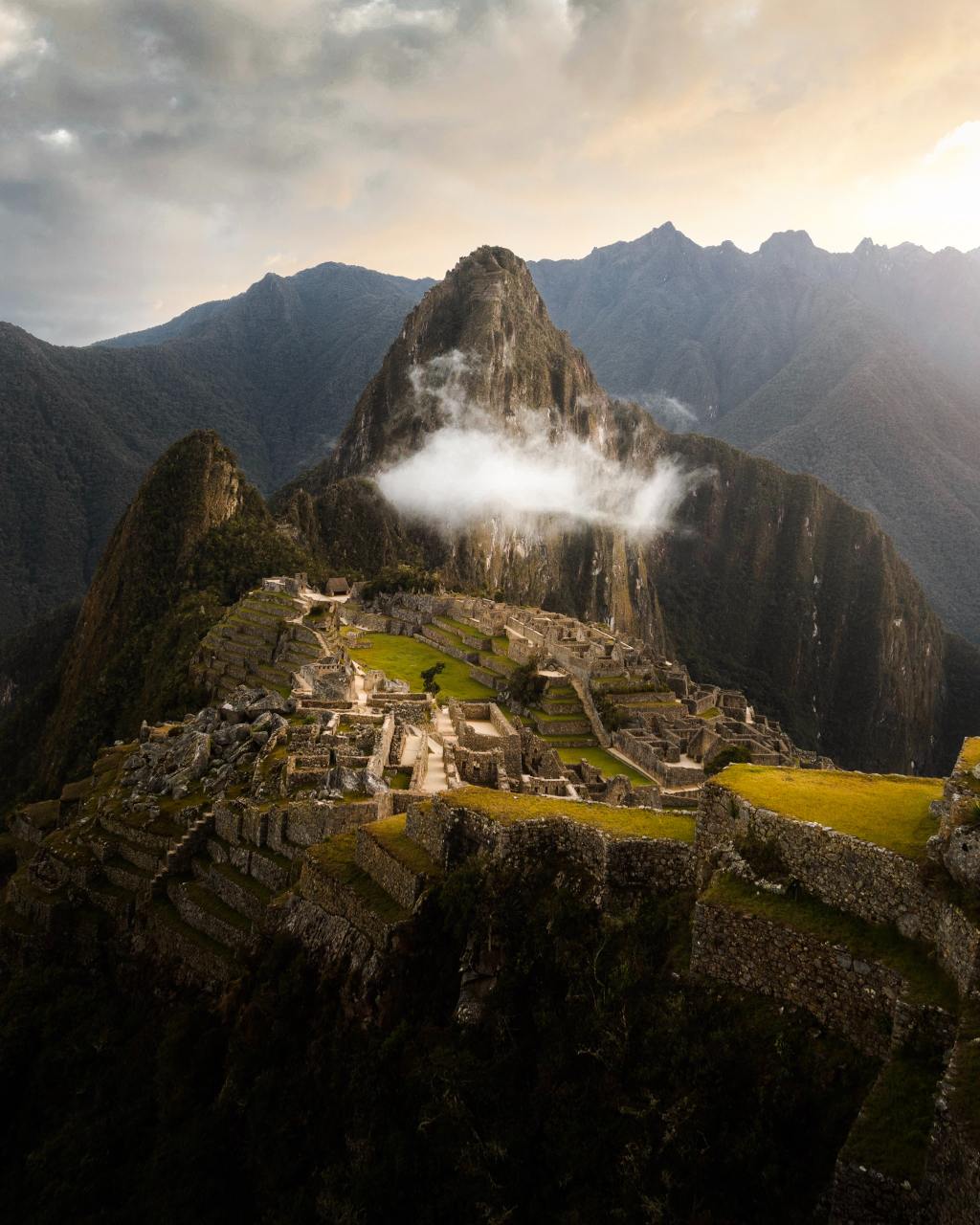
Few places capture the imagination quite like the mountain wonder that is Machu Picchu.
Built in the 15th century, this short lived modern wonder of the world sat unfinished in the Peruvian Andes, until some white guy “found it” in 1911 – or did he?
Join Rebecca as she talks about the lasting effect of white tourism, archeology, and what the future of Machu Picchu might look like.
Sources:
- Books:
- Cusco and the sacred valley
- Making Machu Picchu: The Politics of Tourism in Twentieth-Century Peru
- Daily Life in the Inca Empire
- Turn Right at Machu Picchu: Rediscovering the Lost City One Step at a Time
- American Chica: Two Worlds, One Childhood
- The Motorcycle Diaries: Notes on a Latin American Journey
- National Geographic
- Videos
- Photos
- Wikimedia
- Spanish Articles
LISTEN NOW!
Transcript:
Rebecca (00:10.658)
Rebecca Robinson here from Dark Wanderings. I am so stoked to be back for season three, and I’m really excited to share new information, stories, and history with you all as we get into the season. Laura is definitely joining us. She just couldn’t make it to today’s recording, so I’m really stoked to jump on in and share some really exciting information and history on subjects that are near and dear to my heart and deal with some things that I was recently able to travel to and explore and get a more intimate knowledge of.
So definitely doing things a little bit different this season. So this is our season three. As you all know, if you’ve been following us, if you’re new, welcome. But if you’ve been following along with the pod, we had a very short season two, which was unintentional, but I had some last minute medical things, nothing serious. We just did not have the time or energy to keep going with things as we had previously planned. Laura has a toddler, as she’s mentioned on the show. So it’s a little bit hard for us to…
navigate everything. So we’re hoping this season things will go a little bit smoother and we’ll be able to do as many episodes as possible and have it match more what we were able to accomplish in season one, but also better. We are also trying to xmake the podcast more accessible to everyone. So that means that we’re actually going to be doing video content, as you can see if you’re finding me on YouTube. And that means that we will be recording ourselves doing the podcast and talking about historical events.
just to make it a little more accessible. So that will include additional videos, maybe auditory, maybe graphics, that sort of thing, just to better illustrate what we’re talking about. Welcome to Dark Wanderings. Dark Wanderings is a podcast that explores kind of the underground or weirder part of history and travel. You could say it’s kind of macabre, you could say it’s kind of…
dark, i .e. dark wanderings, but we also try to have some levity. We also try to make it educational and to shine light maybe on things that often get overlooked in the cultural zeitgeist or through popular culture and discussions around certain historical things and events. So our goal is to make knowledge more accessible and to bring up discussion and points about
Rebecca (02:29.07)
times and things that happen that maybe don’t otherwise get discussed and looked at. So that’s our goal and I feel like we do pretty good job. We’ve had a lot we’ve learned over the last two years, including how to better do recording and how to edit things and what software to use and where to post stuff and what works and what doesn’t and how to schedule things. So we’re still learning a lot. We, you know, we’re doing this as a hobby, kind of on the side for all the other projects that we work on, but
It’s really been a very fun and creative outlet, and I hope you all will enjoy traveling with us and learning with us as much as we enjoy researching it and putting it together. So let’s take us back to about 1999. And like a lot of kids from the 90s, I loved the show The Wild Thornberries, and they had an episode on the Andes that I absolutely loved. And around that same time, I figured out, like, they’re talking about these ruins and these places that you can go see.
Like these are real places in the world that I could go and explore and plan. Plan loosely. So that’s when I figured out Machu Picchu was real. And I was a kid that watched way too many like old movies, documentaries, National Geographic, Animal Planet. like I was constantly taking in information and constantly dreaming about traveling. And that
ended up including Peru. so fast forward, I’m in my mid -20s, I decided I really, really, really want to hike in Peru. And at the time, I really only knew about the Inca Trail, which I’ll get into in a little bit about why that’s important. And then I, over time, I joined working in the travel industry, I learned more about what options and information and activities are out there. And I realized, like the Inca Trail maybe isn’t the option for me. So…
In the midst of all that, I found out I had some medical stuff and I couldn’t just go up and hike, you know, at 14 ,000, 15 ,000 feet without taking care of things. That’s part of what I was taking care of last year, as I just mentioned. All said, it took about 25 years. Yeah, because I’m 33 and a lot of patience to finally get it to where I could actually go to Peru.
Rebecca (04:46.806)
and I did get to do some trekking and I got to go to Machu Picchu along with a handful of other really amazing sites outside of Cusco and around Lake Titicaca and even Lima. So I took a long time to get me there. But April, I did a two and a half week trip and it was nothing short of absolutely amazing.
I have some really good content on my TikTok and my personal Instagram, so if you want to check those out, definitely do, I’ll be tying in some of that as we go through this, but it really was one of those trips where you know you were one person before you left and you were a different person by the time you flew home. And yeah, I think all in really good and powerful ways. I travel solo a lot, but there is something about going to a country where I literally knew nobody, I had nobody.
that I could immediately reach out to and get help from, whereas other trips I have traveled to, I knew somebody in that country somewhere or in an adjacent country that I could easily access within a number of hours. So that was a little intimidating. Language barrier definitely caught me off guard a few times, but all in all, was a phenomenal trip and Peruvians are some of the nicest people I’ve ever met. I’ve rarely felt so safe and cared for and just…
respected in all of my travels around the world. So lots I could say about that. But the point of today is to talk about the one, the only Machu Picchu. Or I might be butchering this Machu Picchu, which is what the locals actually pronounce that as that’s not actually the ruins name. That’s the name of one of the mountains that’s by the ruins. The ruins, we don’t know what the name actually was or
could have been because a lot of that’s been lost to history. And we’re going to go into some of that story today. So Machu Picchu is considered one of the seven modern wonders of the world, which has greatly increased its popularity the last 15 to 20 years. It’s greatly increased the interest in Peru travel along with kind of happening at the same time is the rise of things like social media and YouTube and podcasts and things like that.
Rebecca (07:06.37)
So it’s become kind of this Instagram worthy experience. It’s become almost too popular according to some people. So it’s a difficult situation. It is in one respect the symbol of Peru and Inca and pre -Columbian Peruvian history. And another hand, it is a symbol of overtourism and problems that come with that.
So Hiram Bingham is credited with the founding of Machu Picchu in the early 20th century. But the story is a little more complicated than that as it goes with most archaeological finds of that time and who really gets the credit for it. So Hiram Bingham is this interesting individual. He’s had kind of an adventurous life. He was born in Honolulu and he was the son of pretty important powerful missionaries and different things that they were involved with.
And then going into his adult years, he kind of becomes this adventurer and academic, this archeology professor, Latin American history professor. He’s teaching at Yale. He has a lot of influence in these fields. So he is able to get backing to go to Peru in 1909. And he starts doing research on a variety of things while he’s there, including different ruins and different locations that are important to Inca history and local history.
So he gets in his head that he really, really wants to find the city of Vilcabamba. Well, Vilcabamba was notorious in that it was like the last stronghold of the Inca when the Spanish conquistadors and everybody arrived in the 16th century. And basically it was the last location that the Peruvians were able to fight from and to say, you know, like have that little last standing ground against the Spanish. Around this time, Pusco’s really…
Also joining the 21st century in that there are more people visiting it. There’s kind of a renaissance of intellectuals and different things with that. There’s a lot happening that’s improving what’s going on with the cities. There’s a southern railway built that connects Puno, which is on Linktidi -Kaka to Cusco, which brings it a lot of commerce, ideologies, different things. That’s obviously on the border of Bolivia, so it interconnects those two cities as well.
Rebecca (09:31.27)
And there’s kind of things bubbling, you know, there’s there’s locals, Cusconians, who are starting to study their local history, they’re taking an interest in archaeology, there’s different political events happening, such as organizations that are being built and different individuals that are assigned to oversee certain archaeological or historical research and studies. So it’s kind of in its infancy, whereas like
Bingham’s coming from America, he’s coming from universities that have a couple hundred years of standing and research and standards. Archaeology is still in its infancy. Historical studies are relatively by a more modern standard in their infancy. So like the standards that Bingham was operating under are very different than what we would consider appropriate today.
And that’s a theme that you see in a lot of history from the 19th and 20th centuries. It’s around this time too that we get more interest from outside parties. So a lot of American companies are doing things like we kind of envisioned of travel in the 1890s in early 1900s, which is, you know, more adventure travel, exploring.
It tends to be really wealthy individuals. It’s by a ship. You cannot fly to places at this time. It’s train if it exists. It’s ship. It’s over landing maybe in a vehicle, maybe by horses, mules, donkeys on foot. In the Andes, it was a lot of llamas. Travel guides are written about Cusco and the area at this time and it’s really kind of considered like not clean. It’s considered unfriendly. It’s considered kind of rustic.
And from my understanding of seeing things even today and from then, they just, that wasn’t a priority because people were just trying to live their life. They’re trying to, you know, farm, they’re trying to pay their bills, they’re trying to take care of their kids, that sort of thing. Their way of life was nothing unnatural or uncomfortable. It’s just that the priorities of a different world, of a modern world were very different for the people that lived there.
Rebecca (11:48.385)
So there’s a lot of ethnocentrism when you read these articles and you learn about these things. There’s a lot of, we need flush toilets. we need this, we need that. And even in the United States, my answers just included, a lot of people were using outhouses for their business. A lot of homes didn’t have electricity. There was a lesser standard of living across most of the United States.
and through Latin America that just was. There wasn’t really anything wrong with it. It’s just what it was. Now, granted, when you live in a city, sanitation and things like that are difficult, but the Inca had really built in a lot of canals and sanitation networks and different things well before the Spanish arrived. So there were elements of that.
but there were just different ideas of what a standard of living actually was or should or shouldn’t be. So the writings around this time are a little, I feel unjust, but I also understand the perspective of the time and the people that were traveling had a different expectation of what it should be. If you are going to places like Paris or Rome and there are five -star hotels and the elite and the presidents in the upper crust are rubbing elbows with you and then you go to a different city,
that has no standards like that at all and you’re expected to use an outhouse or a toilet that you know 30 other people are using you might feel a little uncomfortable. And you hear some of that even those echoes even in today. Places I stayed you know as a shared bathroom or you maybe didn’t have hot water every day or you know there’s just things that come with a lot of people living in a place that has a lot of old
plumbing and systems in place that don’t necessarily keep up with modern expectations. Hiram Bingham shows up in Peru in 1909 for the first time. And then it gets to 1911 and he’s doing another expedition. He’s looking at maps that go all the way back to the 1860s. And they have marked the area around Machu Picchu, what we know today, and that there are ruins located in that area.
Rebecca (14:03.337)
there was knowledge that this place existed. There was knowledge from locals, there was knowledge from early other explorers, and from other map makers from the area, so there was knowledge that this existed. There’s also the efforts to build roads to the region, there were efforts to build trains in the region, some of this was because it could connect to the rainforest where rubber production and other production, along with mining areas throughout the Andes and going into the rainforest basin,
All of this was being looked at and you could argue exploited, but that’s an argument for another day. So there was kind of a knowledge that something existed there. It’s just nobody had with the credentials that Bingham had explored it. So he starts using different historians in the area and he starts using Hacienda owners that lived around the area and talking to them and being like, hey, like, how did we get here? What do we do?
And he finds this younger man named Melkor Artiega who knows of the ruins and can take him up there. And this is July 1911, July 24th, 1911. They make it to the mountain. And if you’ve been to Machu Picchu, you know how mountainous it is and how kind of treacherous it just, it sits up on this crazy mountain.
Now I’ll show more with the pictures, but it really just nestles on this ledge and that’s part of the reason why it’s so stunning. It’s like how and why would people think to build there? So it’s really, he’s blown away by it. You know, it is before like the founding of Tootin Commons’ tomb, but it is on that same level of excitement. This is a find of a lifetime. And really this is what Bingham is known for the rest of his days. Nothing else he does.
has the same level of prestige. So there is actually a family living at the ruins called the Richardes and their son Pablo Richarde guides being them around the ruins to the people living there and they’re like, this gringo showed up. We’ll show them around. We live here. We farm here. There were already terraces. It makes sense that we live here and we farm here.
Rebecca (16:20.733)
And we have a pretty comfortable living. Because the organizations that are kind of governing and overlooking archaeological sites in Peru are in there, they’re very, very new. There’s kind of some rough contracts put together by Bingham and other people to start exporting these things. And it’s agreed that he will come back. He gets backing from Yale.
Abercrombie and Fitch, which at the time was a like outdoor supply company, very different than what we know from the early 2000s. Kodak Winchester for rifles, Kodak for photos, he takes thousands of photos during his time doing the excavations and exploration and National Geographic backs him. He writes a very famous article, which I will link in the show notes, describing his finding of this location. And of course, he
builds up who he is in this finding, and that it’s so remarkable, and it’s so important, and it’s so good. And obviously to play on this sort of heroic adventurer, heroic explorer, you know, he really kind of hams it up, and he goes into a lot of details about what he found and how he trekked through the jungle and this and that. All of that is true to an extent, but there were trails going all over
the place that went back hundreds of years, if not a couple thousand years, to Inca and pre -Inca civilizations that they used to communicate and travel between. So as someone that has trekked and been to some of these places, I can see coming from a place like maybe New England or other parts of the States or even other parts of South America or Central America, like I could see it being a little more intense than other areas, but
It was by no means just totally undeveloped, lost in the mountains, nobody was around, like that’s just not true. So I think that story or that idea of what he discovered is still existent, that he was this lone traveler and he was so important and he figured it all out and he broke the mystery. it’s only an iota of truth. The truth is that he had a lot of people helping him, including the family that lived there. And so he goes back in 1912.
Rebecca (18:41.741)
then again in 1914 to 15, and they start taking goods back to Yale. And that was kind of the expectation of Yale when they were backing his tours and backing his exploration and everything because they needed artifacts and they wanted to study it and they wanted to improve on their collections. Things that were at the time like very normal to do is they were just taking things. Well, proving government kind of frustrated with this, so they kind of make this sketchy.
deal that basically says they can take the stuff, but Peru can ask for it back at any time. And if you want to read more about that whole process and what that looks like going into the 21st century, I highly recommend Turn Right at Machu Picchu. So basically, there’s kind of like an agreement, maybe you’ll say like a gentleman’s agreement that he’ll just take all this stuff, but there was never really anything put in stone, really agreed upon.
like really solidified before he just took crates and crates and crates and put them on a ship and took them back to Yale. So all of this stuff that’s Peruvian, it is Inca history, it is Peruvian history, it is important history. And because the site was intact, it had not been destroyed like a lot of other Inca locations around Cusco region. It was significant for our understanding of the people that live there and what they built.
It’s very important. whereas other places like Sasukewomen, which is in Cusco, other areas of Cusco, they had been destroyed, eliminated, reused, taken. Mummies, which will come into play in our second episode and are really important to these people, they were burned, they were thrown away, they were destroyed. so Machu Picchu was this sort of capsule.
of history, but there’s a lot that like overgrew it and because of the overgrowth and because it wasn’t on a main area, because the Spanish never went there, because Catholic missionaries never went there, a lot of things were preserved. So Yale taking all of these artifacts outside of the country put Peru at a disadvantage of having their own history and culture on hand to study and use. Bingham writes other articles for National Geographic, this book published called Inca Land.
Rebecca (21:04.511)
It doesn’t do great. He barely talks about Machu Picchu. He kind of makes all of these promises. I’m gonna write another book. It’ll be about Machu Picchu. I’m gonna do this. He has kind of wacko theories that this is Vilcabamba, that it’s the romantic historic founding city of the Inca Empire. It’s none of those things and most modern historians would not even venture to believe that is. But he has all these kind of dispelled myths and he thinks because he found it
But he’s right. goes back to the States. He gets involved in politics a little bit. He, you know, he kind of his famed Wendels as World War One rolls around the interest in Machu Picchu dwindles again, because there’s just other interests and other things. Not a lot happens from around 1915 until the early 1920s in Peru. There is some interest in it, especially from local Peruvians.
But there’s kind of this cultural disconnect between say the elites that elites that live in Lima, that are really more Spanish influence versus the people that live in Cusco, which are much more native influenced. And there’s kind of a because Lima has so much wealth and commerce and trade, and kind of built itself up as this elite capital versus Cusco, which is a little more native influenced and has really held on to a lot of its colonial appearance, things like that. There’s a lot of
sort of rivalry and people that are from Cusco and the Cusco region and Native heritage tend to be looked down to on. And this is connected a lot to like caste systems that existed in the Americas, Latin America specifically, where depending on the amount of Spanish versus Native you were or even Black, African slaves, etc. that kind of determined your standing in the world. Now there was definitely work
and pushes to kind of eliminate that by different politicians and different political movements, but it was a slow process. And even to this day, you can kind of see a preferential interest in Lima and money put in Lima and interest in Lima versus Cusco and how it’s presented on an international and national stage. Now, I am not an expert on the culture of modern Peru or things like that, but I do know living in the States that there is always
Rebecca (23:21.773)
of a white supremacist game in these kind of dynamics. I it exists in other parts of the world, including Mexico, and it’s a constant battle to work against white supremacy and ideas of being better or worse based off of your background and based off of the color of your skin. So all of these things go into play when we’re looking at things around Cusco and we’re looking at things around Machu Picchu. So in 1928,
they finish a railway that goes to what is now modern Aguas Calientes. And that has a big impact on tourism for the area. So on top of that, there’s growing interest. The articles like kind of come to the forefront again, people have an interest in what’s going on, being still kind of known as he’s doing his politics and different things.
1933, they opened an airport in Cusco, air travel is starting to become a big deal and option for people to get to and from places. In 1930s air travel to go at the high elevations that we’re talking about, where Cusco sits at about 12 ,000 feet, you have to go quite a bit higher in order to travel there, to go over certain Andes Mountains, like there’s a lot that goes into it and a lot of logistics. So the Cusco airport opening is a pretty big deal that allows people to travel more easily, instead of going by say car or
by horse or whatever between, say, Lima and Cusco. So that opens up lot of possibilities for people to be able to travel. Even train trips were a lot more tedious at this time. So it’s a good economic indicator. In 1934, it is the 400 year anniversary of the Spanish arriving in Cusco and establishing it as a Spanish colony. And regardless of feelings
towards the Spanish or historical influence, it is part of the history and it’s something that is celebrated in the area. And local officials really see it as an opportunity to increase tourism from Peru and also present more information internationally. So there’s a big push to build hotels. There’s nationally built hotels. There’s thought projects around doing things up in Machu Picchu. There’s there’s all kinds of things going on to try to make Cusco and Machu Picchu and much more.
Rebecca (25:33.631)
accessible location and much more of a role player for tourism. They see tourism as this additional revenue and this additional interest coming from the global stage. They could really propel Peru in new and exciting ways. And they’re not wrong in this. And there also begins this thing in the depression in the 1930s and 1940s with Franklin Delano Roosevelt, where he builds this good neighbor policy with Latin American countries and the United States. And the hope is
to build connections through commerce, but also through culture. There’s film crews sent different places to make movies, to do radio broadcasts. Orson Welles does an episode on the Andes. There’s all kinds of different things that are influencing and trading sort of these cultural ideas and history of Machu Picchu with the Americas, specifically North America. Then, you know, obviously World War II happens again.
there’s an interest in things that changes, priorities change, interest changes. But with the decimation we see in Europe, we also see an increase of interest in travel to Latin America. And there was predictions accurately that there would be an increase in financial availability and wanting to travel. This is a trend we still see in the travel industry that after some time of
unrest or a dip or reasons we can’t travel somewhere, there’s suddenly a big interest in it again. So it takes time. It’s not an overnight change, but it is a thing. So in 1948, Bingham finally returns to Peru after quite a long hiatus away from the country, and he opens up a highway that will connect Machu Picchu to Cusco much more easily, increasing the availability of travel and tourism, and then 10 days later, there’s a military coup.
And this kind of opens up an ongoing turmoil that exists in Peru up until the 21st century. And it’s not to say that nobody was there, nobody was visiting, it’s just that it made it a lot different to travel to than what we see today. In 1950, there is a massive earthquake that hits Peru and it pretty much decimates Cusco. The buildings that survive are predominantly Inca buildings that go back four or five, hundred years and before
Rebecca (27:53.165)
Whereas the colonial buildings, some of them collapse entirely. A couple of the main churches are just like entire towers fall down. So the city has hit really hard economically and culturally when these earthquakes happened. When I was there, they were still talking about this and these happened 74 years ago. That’s how big they were. Now, timeline wise in Cusco, it is known that roughly every
I believe 400 years there’s a big earthquake. So that was right on time, 1950. There are records of the last big earthquake in the 1500s, in the 16th century, around the same time, and what that did to the city. And so it was known that it would happen. It just happened, and it killed quite a few people and injured plenty more. So 1950s, they’re kind of…
debating on how to build the city back. Do they make it totally modern? Do they keep the colonial roots? They kind of, I believe, found a middle ground where they’re able to increase the accessibility of tourism, but also keep their colonial and ancient roots intact. And that’s largely what we see of the city today. So around the 1960s and 70s, we have the hippies era, and it’s spelled J -I -P -I in Spanish, which I find really funny.
But the hippies era is really where we start seeing a lot of affluence coming from North America, where baby boomers, that generation, was able to travel much more readily due to affluence, but also cultural norms had shifted. It was a little more common for people to go and travel the world and do certain things that weren’t maybe tied to some type of military or extreme wealth. So there’s a lot more accessibility available.
You also see people kind of exploring counterculture and religion and different things like that. So you start seeing people traveling to Asia more, you know, the backpackering routes through Europe, you start seeing people coming to South and Latin America. And that it has kind of that mixed bag. So whereas like Peru had been very much a place to travel if you had money because of the expeditionary nature of it, because of the accessibility of it.
Rebecca (30:15.255)
because those complications now is becoming this sort of backpackers cheap place to go. You have a lot of white people that move to these locations, whether they’re from Europe or they’re from North America. They buy places, they set up hostels, they set up restaurants. There’s like things that happen and that continues well into today. About the time that this is starting to happen, there’s a lot more political strife. And I don’t want to go into all of that today just because I think that
There’s other resources out there that can do a much better job, but there’s a lot of conflict in different policies. There’s some guerrilla warfare. There’s different organizations that are anti -different establishments. It could go on and on about different things that are going on there, but it’s a lot that’s going on basically until around the early 2000s. In the 1980s and 90s, the of the hippies that had been there realized that there’s a market and opportunity for additional travel options.
And basing it off of already existing things such as Inca trails and trail systems that native peoples were using to reach their farmlands, to graze animals, etc. They start realizing that they could do trekking opportunities and trips for people as well. And that’s where you start the actual like big boom interest in the Inca trail. It’s set up in the 80s and it’s cleaned up and continuously built up and built up.
as an option going into the 90s. But the thing is, like, because of the political unrest, it really wasn’t the safest place for outsiders to travel. Today, it’s extremely safe. Okay, I wouldn’t say extremely safe, but it’s really safe to travel to places like Peru. Anywhere has things that go on. can happen. Things can happen anywhere, but it is
comparably much safer to travel to Peru today in 2024 than it was 30 years ago or when I was a kid. Some of this has to deal with political turmoil, military, militant groups. And then also there’s like a severe cholera outbreak from 1991 to 1993 in Cusco that affected thousands of people. So there were issues that existed.
Rebecca (32:28.941)
for a variety of reasons. Throughout all of this time, UNESCO is involved in the preservation and care of Cusco and Machu Picchu. Going back to the 1950s and before, UNESCO was involved in kind of establishing ticket booths and establishing accessibility and establishing different activities and things for people to do to get up there. And they continue to be involved well into the current time. In 2006, an article comes out.
that lists Machu Picchu as one of the modern wonders of the world. Out of all the things around the world, this is one of them. And that just skyrockets the interest in Machu Picchu. And I think it’s legit. I really do. But when you have a list like that, that comes out in travel, whatever it might be, the same with, you see, with Michelin stars or James Beard Awards, whatever it might be, you have a sudden…
blow up of interest in people wanting to go there because they want to say I have been to all seven wonders of the world I have done all of the things that I am supposed to do as a traveler whatever I don’t travel for lists I have interests and then I go see places I will say though everywhere on this list is on my list so Mark Adams wrote Turn Right at Machu Picchu and really was working on it around 2009 2010
when he was there. It’s a great book. I don’t know why gets as much flack as it does, but it’s a really honest and I feel fair portrayal of what it is to do adventure travel in Peru, which I really appreciated. But he talks a lot about the political conflict around Yale having all of these artifacts back in 2011 and eventually deciding to return them. He basically Yale got sued by the Peruvian government and had to return all of the artifacts. So
now they live in a museum in Cusco it’s fabulous I suggest visiting it either before after you maybe go to Machu Picchu because it gives you additional context on life and times there and that really opens up our understanding of what Machu Picchu was. Other things that have happened since its founding by Hiram Bingham are that
Rebecca (34:39.979)
They have lot of Cusconians and other Peruvian archaeologists and researchers actually investigating and looking into the history of these locations and their perspective along with maybe their cultural identity and understanding of the region and understanding of the past is greatly improving and informing our understanding of what Machu Picchu was in the past and obviously why it still has such a draw today. A few things that I learned when I was trekking in Peru is that there is a deep
deep -seated love and adoration of nature. And that is consistent with Quechua people today. It is going back probably millennia, and it was a huge part of the Inca that ruled over the Quechua people. The Inca didn’t have a writing system. They had something called a kipu, which was basically a thread or a yarn with additional yarns coming off of it that they would mark events, history, information by knotting it.
The knowledge of what those said is gone. I don’t know if it’s something that would ever be found again or understood. The best guess is that that was record keeping. It was some type of military information. It could be easily folded up and traveled with to share information between micro kingdoms, towns, cities, et cetera. So a lot of stuff we have is based off of early sources from the Spanish, which
let’s be real, that would be an unreliable narrator given their colonial standing. And then the other part of it are a couple of books that I’ll link in the show notes that go into, I should say one book that’s a written account of everything and then one book that is basically a long letter that was written to the King of, I believe, Denmark. And it has a ton of illustrations that talk about the daily life of living in Peru during the time of the Incas.
And those are really our kind of primary sources that still exist to this day. The other side of that is using that foundation, using additional archaeological research, and then being able to find and determine different details within that. So our understanding of Machu Picchu is that the location was one that sat between different lines of travel. So
Rebecca (37:06.975)
with kind of like a pilgrimage spot coming from different directions. So when you, let’s say, are hiking in Peru, or if you decide to do a trek, the only one that will actually go to Machu Picchu is the Inca Trail. And there’s different versions you can take. You can do one day, can do two days, multiple nights, etc. So there’s that option, but that is the only trail that will go into it. Now there are other trails that left from where is Machu Picchu now, but they’re no longer.
up and some of these were wild. If you go to Machu Picchu you can see one they call it the Inca Bridge and it was literally like two, like two bovifors or the equivalent of put over this like rock cut out and the rock face had been drilled and cut all the way around the mountain. Basically it would go into other locations so you would have these lines of communication, pilgrimage, connection, culture, etc.
the wind throughout the entire Andes. And that is one thing that really led to the success of the Inca Empire was this lines of communication that were built and were successful because of so many little highways. And they would have men that would literally just run these trails to get information back and forth between each other. So that trail system made them successful, but the trail system didn’t like start with the Inca. It went back to pre Inca civilizations and was really a standard
way of life to get through places. So the trails like I went on, which were above Aleras Valley, were literally old trails that they used for llama herding, they used for planting fields, they used to access materials for trade, for business, for whatever. And so the people that live in these communities literally take trails that have been used for thousands of years to connect their communities, to connect each other’s farms.
and to access resources that they need to be successful. these are crazy environments. You can think of some of the wildest trails you’ve ever seen in, let’s say, Colorado, and that’s just all of them. You know, it’s a lot of scree, it’s a lot of drop -offs, it’s a lot of, you know, rough terrain. And you get up to a certain point and you’re above the tree line and it’s just like rolling hills of green.
Rebecca (39:21.965)
But what a lot of people did in the Inca time and before maybe priests or people just trying to kind of figure out something in their life is they would trek up these trails into the mountains and basically go for days at a time and have kind of the spiritual journey maybe at the top of the mountains that were 20 ,000 feet or wherever some of them would take hallucinogenics. Some of them would just be oxygen deprived and that would be a way for them to commune with their ancestors or with the spirits.
Another important element is that everything has a spirit. So the mountains all have what they call a poos and different elements, spiritual elements, energy elements related to every single living thing. So to them, everything is interconnected. Everything comes around is all cyclical. And the Inca actually had these symbols around Machu Picchu that are like steps, almost like a pyramid.
going up and then going down in like a circle in the middle, and it represents different elements of living and existing and sort of the infinite cycles that everything goes through. So all of these elements kind of collide at Machu Picchu. So what the theory is, is because of its location, which is very much in line with the solstice, their winter solstice, our summer solstice, and
in line with North, South, East, West is that it was very much considered just this sort of spiritual coming together of everything they believed in. On top of that, they saw in the rock faces the puma, the condor, and the snake, which were all the three most important animals to Inca belief systems.
So when you see these animals in different elements of this location, and or you can build it into the landscape, which was very common, Cuzco itself was laid out like a puma, you have these very natural elemental designs built into everything. And it really becomes just this stunning masterpiece of paying homage to their belief systems. But on top of that, it’s so much more.
Rebecca (41:40.831)
everything is granite, which if you’ve been around granite, you know granite is really solid. Like there’s a reason it’s a very popular material inside of homes today for countertops is it’s a very solid stone. It’s reliable and it lasts for a very long time. And when you walk around Machu Picchu, it’s not finished. There are places that they didn’t finish for whatever reason. And but they also built around things. So if a stone looked like an animal, or if it had a shape that was
matching to what they were trying to accomplish were beneficial in some way. They built either like into it so they might cut into the stone or they might cut around it or they might rearrange things to make it better match. They were master craftsmen and engineers and I mean master. Looking at these things when you’re there is just humbling. It is hard to believe that anyone would want to build on basically the tippity top of a mountain. Think of going to the top of I don’t know
Bierstadt, Mount Bierstadt or Pikes Peak in Colorado. These are what I’m using for reference because they’re places I’ve been, but basically like just flattening it out and then building an entire city on top of it. As far as landscape goes, geography and environment, quite a bit different, but it is impressive to say the least. is mind boggling for the most part.
And I felt the same way when I went to Chichen Itza, when they were doing auditory things and different elements there. Now, the Inca and pre -Inca peoples built everything. They didn’t build perfect squares. They built everything like trapezoidal so that when there was an earthquake, it would move. So the story goes, the buildings would wiggle, the buildings would dance because they all moved around with the movement of the earth.
But they wouldn’t collapse because the way that they were built and the multiple sides and that sort of thing helped their stability. And that same thing is practiced at Machu Picchu to enable its survival. When the 1950 earthquake hit, Machu Picchu really wasn’t impacted by it. More things around the area that were modern buildings were, but Machu Picchu pretty much remained okay.
Rebecca (43:54.101)
On top of mastery and building, they would build into stones, they would build around stones if stones looked like an animal. There’s one area in particular that’s like a temple. It’s the temple of the Condor and they basically carved a face and a stomach underneath this rock formation and they would sacrifice llama to the Condor, into the stomach. was a sacrifice to their deities, their beliefs, their spirits, their ancestors.
Everywhere you look there’s just something. There’s the lining up for the solstice. There’s the north, south, east, west. It has an energy to it. I think just being in such a stunning location and realizing how significant it was to people. There are some darker elements to life at that time, but again, this is a different culture, different norms, different beliefs, different needs as a society. So there were some human sacrifices known to have been done there, but they were really done as part of
an honor to the whole community, which basically was a tax system that everyone used. It was a system that allowed people to share labor and resources. So the Inka would utilize people for X amount of time to build roads, to maintain things, to do buildings, to this and that. But then everyone was taken care of for food and shelter. Obviously these things tend to have issues in reality, but in practice.
people were taking care of. There was a welfare state, there was a socialist state that enabled people to be successful. So if there’s famine in one area, there were resources rerouted to another area. Going back millennia, there were techniques of preserving things like potatoes and corn and all of these things that made their civilization possible. They utilized wind and directions of the sun and where it hit certain mountains and areas where they would build storehouses.
And if you go to Ollantan Tambo or you go to Pizoc, you can see where they built storehouses and different things that enabled them to be a successful community and enabled them to survive long term. Terrace farming, using coca, different things like that all had an impact on how they were successful as well. Now, if you don’t know, coca is obviously what they use to make cocaine, but it has a lot of elements in it. Chewing coca is a very common practice even today, and essentially it acts like really intense caffeine.
Rebecca (46:17.665)
So going back again millennia chewing coca was a way to survive at high altitudes. It was a way to get more work done. was a way to be more comfortable. I personally tried it. It was not for me. The coca candy and the tea were fine, but it is very bitter and it’s dried and it tends to kind of get stuck in your throat. So if you have a gag reflex, maybe don’t.
People still trade coca today and traditionally it was you trade coca from your area and you take from somebody else and you know, there’s all these just things that go into it. was sacred. So Machu Picchu existed not only as this homage to belief, but they also had trial gardens. So there’s terraces going down the sides of the mountains.
And it’s believed that they were trying to grow different things that they maybe had to import from other regions of the empire, such as coca. So coca won’t grow over a certain elevation. So they were trying to see if they could change the dynamics and make it work better. Every site I went to, they practice what we would kind of call like a French drain system where you have, you know, small rocks underneath a layer of dirt and topsoil. then it
floats down each layer to make sure everybody, everything gets water and moisture and you would plant different things at different levels to get different results of minerals and different things like that. So there are trial gardens that are trying to grow things. They would grow hallucinogenic flowers that they would use in the human sacrifices. The sacrifices, what evidence we have is would be
maybe a younger woman or girl, and she would be selected. And the idea was that she was being sacrificed for the good of her community. And she would be hopped up on drugs and taken on a journey and fed really well and then basically would fall asleep and freeze to death and would essentially be mummified at the top of a mountain. Mummy Juanita that was found near Arequipa, she is
Rebecca (48:20.935)
know, a prime example of some of these practices that existed in different mountain ranges and different things that were going on. So it’s, there’s a lot that goes into all of these belief systems, and they kind of all collide at Machu Picchu. There’s a lot of evidence to that Machu Picchu was really a great location for understanding astrology, and was used for predicting star, star patterns for understanding years for
figuring out almanacs, growing patterns, weather, et cetera. So it was like a location where kind of the elite high thinkers of the Inca culture and communities would come together and work on projects. So it was kind of a center of science and learning as well as being spiritual and elite. So.
Rebecca (49:14.101)
There’s a lot that goes into it and a lot that we don’t actually know, but they’re just visiting it is so humbling and so inspiring to see everything and I just really am amazed at how much has survived. So Montreux Pigeon was never actually finished. I think that’s the thing that surprises people. Like obviously when you find ruins, know, like things have changed by time and decay and that sort of thing.
art where you have a constant fascination with decay and ancient world and different things like that but it is
so interesting that this one wasn’t finished. Like, and it was very purposely like just left and abandoned. And you can see that when you visit it. The theories are, and I think most accurately, was that you had Spanish forces coming to the Americas and that word travel that this was coming.
So I think there’s a possibility people evacuated knowing that they were maybe needed other locations for safety or for resource guarding or for a variety of other reasons, knowing that it was probably a little more of a vulnerable location than other places might’ve been. I think it’s also very plausible that disease reached Machu Picchu before other things did. So we have to look at.
you know, when did disease start to hit the Americas and how fast did it spread? And as we know from pandemics even today, they spread a lot faster than maybe even people can realize or know. And especially when you have no immunity to it whatsoever. And the people in the Americas had no immunity, really, to smallpox or variety of other diseases that came and it wiped out millions of people and it was knowingly killing people. So I think those two things combined
Rebecca (51:12.077)
probably meant that it was abandoned and it was abandoned before its entirety was realized. It was started in around 1450 by Pachacutec. That was really kind of when the Inca Empire was still kind of in its heyday, but pretty new and young at that time. So it was really, I believe, and my understanding of it was building up kind of an elite
playground of kind of showing off the power and representing the elite of that society in that time. And it continued to be that way until basically it was abandoned around 1520 to 1530. It’s not really known exactly when it was abandoned and why. Again, we don’t have a written record.
But our best knowledge of the time and other sources indicate that that was the reason why. I talked almost more about the cultural impact of Machu Picchu, which I do think is important. I think we have to understand a little bit why certain places stick in our mind and what caused that and whether or not that’s an honest representation of what happened. As mentioned, Hiram Bingham didn’t really find Machu Picchu, but because he had
an elite standing prestige and a platform which was National Geographic along with other things such as Yale and Kodak and whatever else, he had leverage to draw attention to it and also rewrite the history of it to say that he’s the one that started it all. So that leverage and that power really impacts how we understand Machu Picchu today. Now to go on to the future of what Machu Picchu might be and what it will be,
I think it’s important to realize that overtourism can be a problem, but undertourism is also a problem. So Peru is starting to get back to its swing of things after the COVID pandemic and complete shutdown in 2020. And it’s starting to get back to things after a lot of political unrest in 2023. 2024 has been relatively mild from my understanding and from my knowledge of the news.
Rebecca (53:30.525)
There are always going to be some pockets of the world that have conflict. That’s just the way it is. But as far as the tourist trail, I know there’s a lot of people working on keeping that safe and accessible for everyone. The future of Machu Picchu is unknown. There is concern going back to the early 90s that having as many visitors as it does will negatively impact the preservation of the archaeological site. And I think that’s true.
This place was never built to have 5 ,000 people walking through today. At most, it maybe had a thousand people living in it at any time. That’s five times the amount of people that it was built for walking through every single day. And it’s an all day thing. There’s time slots you go in, you have X amount of time to go through the trails and go through and see the whole thing. And that is
amazing. I feel so honored I got to visit it and experience that but I also realized that my visit had a negative impact on that archaeological site. And I think that’s important to just understand when you visit places like this. The same goes for places like the Roman Colosseum or Chichen Itza. Treading lightly is really important. How can you do it in the most sustainable way? Now, Machu Picchu’s the…
archaeological site has made decisions in the last five to ten years that have greatly improved how people access the site to make it more sustainable longer. So it’s limited to about 5 ,000 people per day. You have to have timed entry. You are limited in the amount of time you can stay. And they have different circuits, they call it, that take you around different pathways through the ruins so you can see different things.
Now, the purpose of that and the ideas behind that is that then not the same path is being taken every time. People aren’t just wandering around. There’s a little more like strict controls on where you can go and learn about things and what you can touch, or that you shouldn’t really be touching anything rather. And so it allows for less damage to be centralized in just certain areas. So I think that’s been a really positive impact on the site overall.
Rebecca (55:41.121)
So long term, we will see what happens. For as long as I can remember in my adult life, people have been talking about, they’re going to close it down. They’re going to close it down. I don’t think that’s realistic. I don’t think it will ever be fully closed. And I think that is because that is too popular and way too much of a moneymaker for Peru for them to decide that they need to close it. And it’s not just Machu Picchu. It is everything around it.
If you’re a smart traveler, and I hope all of you are, you go to Cusco and you stay for a while and you see additional sights. The city itself is full of history and beautiful architecture and stories and food and marvelous people. The surrounding communities are full of the kindest people I think I’ve ever met and so much art and history and culture, amazing food, kind -hearted people, individuals that would give you anything and everything you could possibly need.
And I owe some of these people for keeping me safe at 15 ,000 feet during the storm that we all got lost in. And they made sure I made it out okay on the back of a horse on a pack saddle. And that’s a whole other story. these are truly some of the best people I’ve ever met in my life. And I feel emotional just thinking about how kind and fantastic all of them were. So if you have the opportunity to visit and experience some time with these individuals, I highly recommend it.
A other things are changing as well. So they are building an airport in Chinchero, which is a community in the Sacred Valley area, which is outside of Cusco. It’s at a much lower elevation. The idea being that the flights for Machu Picchu in that priority will go to Chinchero from Lima and basically not go to Cusco. Now that has big impact for the region of Chinchero, which is largely a farming community and is now growing.
The Sacred Valley has become a hot spot for a lot of everything from ecotourism to ayahuasca tourism and everything in between. So you’ve seen a huge change. There’s a lot of elite and high -end hotels and resorts in the area that cater to very exclusive clientele. You can travel to Peru like I did for a few thousand dollars in a couple weeks.
Rebecca (57:53.293)
Or you can spend $10 ,000, $20 ,000 a week depending on the level of service and luxury that you’re looking for. So there’s definitely some changes and whispers. Again, I spent about $30 a night on hotels and guest houses. A lot of people are spending $100, $200, $500 or more. So it is changing. You still see a lot of hippies, J -I -P -I, but you also see a lot of different individuals traveling there for different reasons.
To wrap up this episode, I just want to point out that there are a ton of Inca and Pre -Inca ruins around the country. And I mean there are a ton. This country, if anything, and I haven’t been to Egypt, but I have had a long -standing love and interest in Egyptology. If any country is comparable to Egypt, it is Peru. And that is…
with the mummies and with the buildings and everything else. Now, I would argue that most of the Americas have examples of these kind of stunning architectural things and cultural things and a variety of different Indigenous beliefs and practices that are very impactful even to today. They just haven’t maybe been found or explored or because of white supremacy, we don’t value them the same way. And I think that is also the case in our
continuous obsession with Egypt and how we view Egypt as very whitewashed and very in line with our ancient world, which it was. mean, just connection wise, it’s right there with Greece and Rome. But there was a lot going on in other parts of the world that are equally important. And I also think it’s important to call out like, it was aliens, what about that, whatever. No, come on. Like, we don’t say that about Stonehenge.
We don’t say that when it’s a white person or white people building something. We don’t think aliens built Roman Coliseum.
Rebecca (59:53.597)
It, these were people, people with brilliant minds and cultural connections and passed down knowledge that were able to achieve amazing things. I feel the same way seeing my insights in Mexico. I’m sure I just feel the same way seeing Aztec sites there as well. They’re just stunning, amazing, brilliant minds that built things. So that is my spiel. I thank you for listening and we will be back soon with additional
stories of my time in
Rebecca (01:00:29.613)
Thank you so much for joining me. This has been Dark Wanderings. Your host has been Rebecca Lee Robinson. We’ll be back next time with Laura Exner to talk about Inca culture and its impact to today. Thanks for listening. full show notes, please visit darkwanderings .com.
 Dark Wanderings
Leave a comment